 India GO
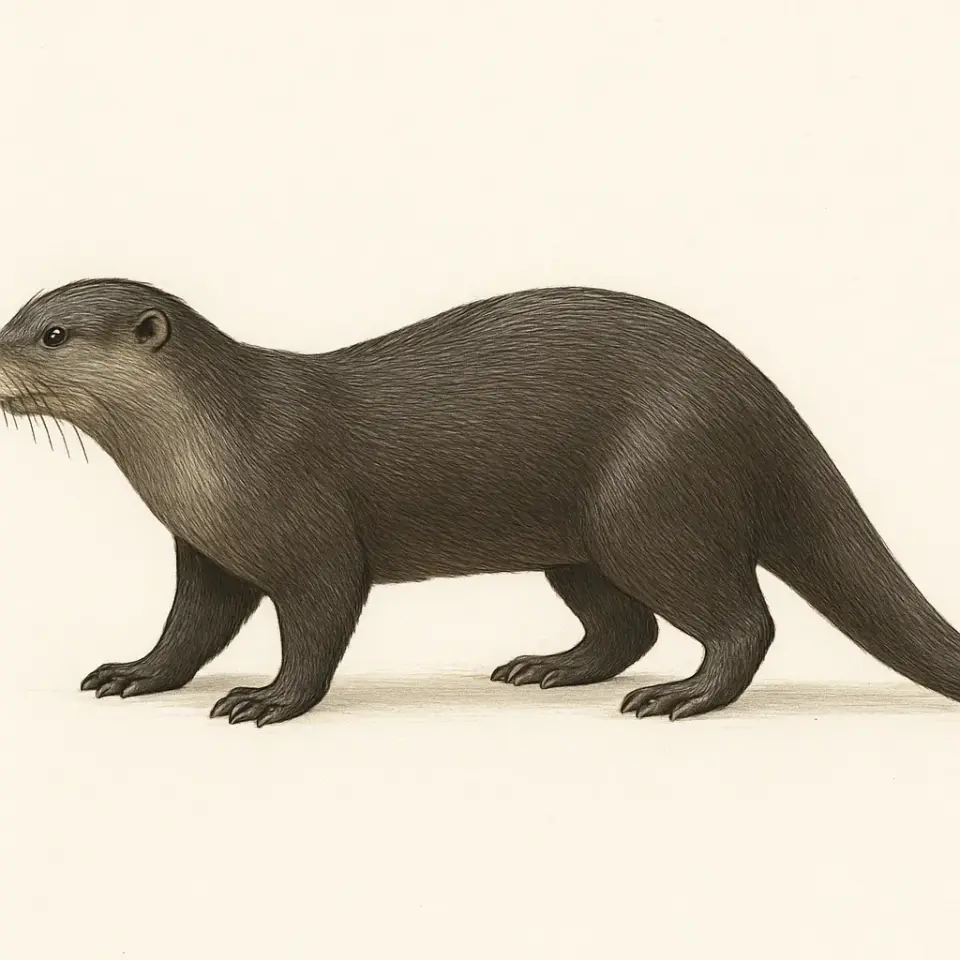
Smooth-coated otter: the family-hunting river otter of India
ऊदबिलाव (udbilav)
The smooth-coated otter (Lutrogale perspicillata) is India's large river otter: 7 to 11 kg, with short, sleek brown fur, a rounded head and a flattened tail. It lives in family groups of up to about a dozen that hunt together, herding fish into the shallows, and it is noisier than people expect, calling in whistles and chirps. It is listed as Vulnerable by the IUCN and is in Schedule I of India's wildlife law.
A river otter that hunts in family groups of up to a dozen, herding fish into the shallows. Its coat is noticeably short and sleek, and it is far noisier than people expect.
How to recognise it
Listen for sharp whistling calls, then look for a line of heads crossing the current together. Early morning and late afternoon on quiet stretches away from boats.
Protection
Schedule I, Wildlife (Protection) Act 1972
Where to see it
Agra
In the Chambal, fish make up about 94 per cent of the diet of both otters and muggers, and the gharial eats almost nothing else, yet a radio-tracking study in the sanctuary recorded little conflict between them and twice saw a male otter chase off a large gharial.
 National Chambal Sanctuary (in season)
Hampi
India's first otter conservation reserve was declared on the Tungabhadra, and it also protects soft-shell turtles. It runs from Koppal district to Kampli and takes in the Hampi heritage stretch, so the river you see from the ruins is a protected river.
Sanapur Lake · Tungabhadra Dam & Gardens
Mysore
On the Kaveri the smooth-coated otter is one of the animals the Ranganathittu boatmen know best.
Ranganathittu Bird Sanctuary (often) · Balmuri & Edmuri Falls
How to recognise a smooth-coated otter
As the name says, the fur is short and sleek, dark brown to reddish-brown on the back and lighter greyish-brown below. Compared with other otters the head is more rounded, and the bare tip of the nose is roughly diamond-shaped. The tail is flattened rather than round, the legs short and strong, and the large webbed feet carry sharp claws for gripping fish. A grown animal measures about 59 to 64 cm in head and body, with a tail of 37 to 43 cm, and weighs 7 to 11 kg.
In the field you usually notice the group before the animal. Listen for sharp whistles, then look for a line of heads crossing the current together, or for several otters resting on a sandbank or among boulders. Their dens are under tree roots or between rocks near the water.
How an otter family hunts
Smooth-coated otters live in groups of up to 11: a mated pair with up to four young from earlier litters. Observations in Malaysia found them active mostly by day, with a rest at midday; they mark their stretch of river by leaving droppings and urine on rocks and plants. They talk constantly in whistles, chirps and wails.
The diet is mostly fish, with snakes, frogs and insects as small extras, and rats from the rice fields in planting season. A group observed in Malaysia hunted in a slightly V-shaped line almost as wide as the creek, the largest animals in the middle, surging through the water so that panicked fish leapt ahead of them before the otters dived and grabbed them. In the Chambal, a radio-tracking study found that otters share their habitat and fish diet with gharials and mugger crocodiles but avoid conflict by keeping different hours, and twice saw a male otter chase off a large gharial.
Where they depend on the monsoon, otters breed between October and February. Pups are born blind after about two months, in a burrow near water, and open their eyes after ten days.
Where to see smooth-coated otters in India
The species ranges from Pakistan and India through Southeast Asia, with an isolated population in Iraq. In India the places the India GO database records are all on big rivers:
- Kaveri, near Mysuru. At Ranganathittu Bird Sanctuary, family groups use the quieter channels, and the otter is one of the animals the boatmen know best. Upstream, they are occasionally seen on the Kaveri above and below the weir at Balmuri and Edmuri Falls. More of the area's wildlife is on the Mysuru animals page.
- Tungabhadra, at Hampi. India's first otter conservation reserve was declared on the Tungabhadra. It runs from Koppal district to Kampli and takes in the stretch by the Hampi monuments, so the river you see from the ruins is a protected river. Otters are a matter of luck here, on the river channels near Sanapur Lake and downstream of the Tungabhadra Dam.
- Chambal, from Agra. In the National Chambal Sanctuary, family groups come out on the sandbars early in the morning, mainly in season.
Early morning and late afternoon on quiet stretches away from boats give the best chance; none of these places can promise a sighting.
Protection status
The smooth-coated otter has been listed as Vulnerable on the IUCN Red List since 1996. It loses wetlands to farms, settlements and hydroelectric projects, suffers from pesticides in the water and a shrinking prey base, and is trapped and poached for the illegal wildlife trade; on the Chambal it is most vulnerable in winter, when it rears young and people work along the rocky banks. In India it is in Schedule I of the Wild Life (Protection) Act, the highest level of protection, and since 2019 it is on CITES Appendix I, which bans international commercial trade.
Local names
In Hindi the otter is udbilav (ऊदबिलाव). In the south its names mean “water dog”: neernai in Tamil, neernaya in Malayalam and neerunayi in Kannada (the word used at Ranganathittu and Hampi).
FAQ
Where can I see smooth-coated otters in India?
On big rivers: at Ranganathittu on the Kaveri near Mysuru, on the Tungabhadra at Hampi, and on the sandbars of the Chambal. Early morning on quiet stretches gives the best chance.
What do smooth-coated otters eat?
Mainly fish, which family groups herd and catch together. They also take snakes, frogs, insects and, in rice fields, rats.
What is the Tungabhadra Otter Conservation Reserve?
India's first reserve declared for otters, on the Tungabhadra from Koppal district to Kampli. It includes the stretch past the Hampi monuments and also protects soft-shell turtles.
Sources (6)
- Smooth-coated otter (Wikipedia)
- Tungabhadra Otter Conservation Reserve (Wikipedia)
- The Wild Life (Protection) Amendment Act, 2022
- Hussain (2013), IUCN Otter Specialist Group Bulletin 30(1)
- Smooth-coated otters in the National Chambal Sanctuary (IUCN Otter Specialist Group Bulletin, 2020)
- Ranganathittu Bird Sanctuary (Ramsar)
Facts checked: 8 October 2026. Prices and hours are approximate; check locally.