 India GO
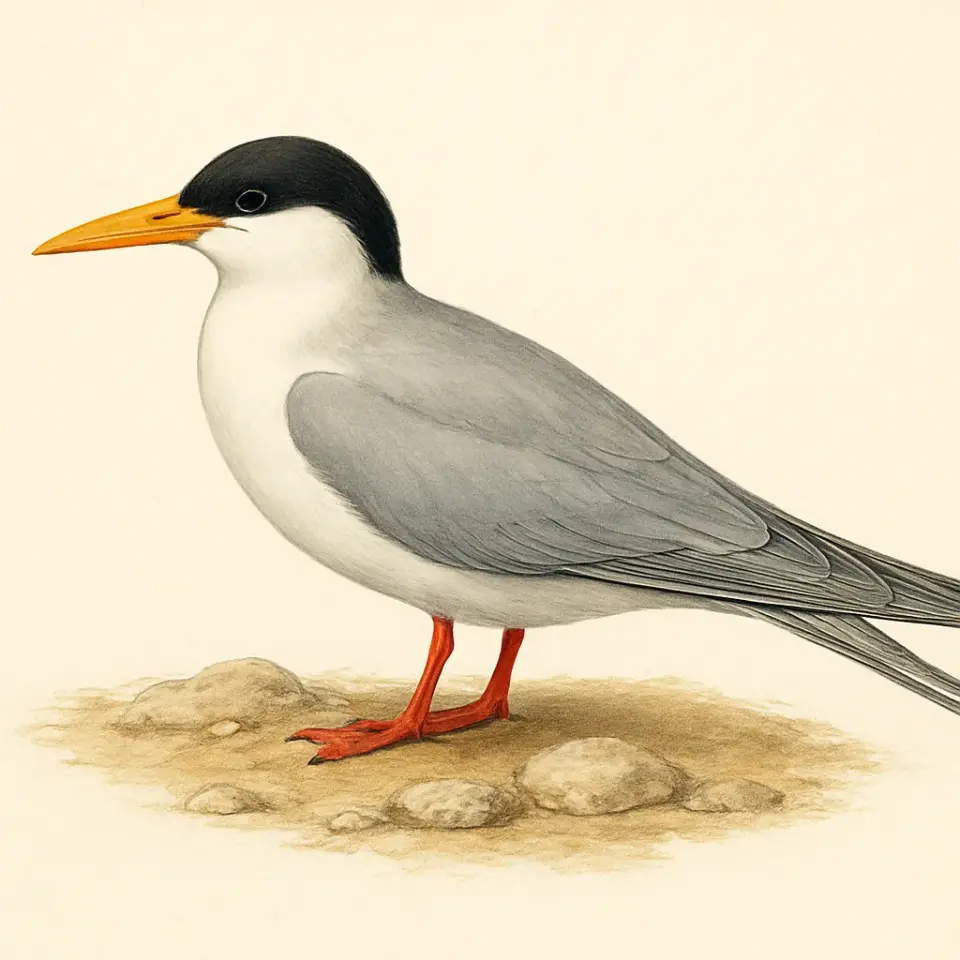
River tern: the yellow-billed tern of India's rivers and lakes
The river tern (Sterna aurantia) is a medium-large tern of inland fresh water: dark grey above, white below, with a stout bright yellow bill, red legs, a forked tail and, in the breeding season, a black cap. It hunts by hovering over open water and plunging in bill-first. It nests on sandbanks and rock islets in rivers, and because those are disappearing the IUCN now lists it as Vulnerable.
A sharp, fork-tailed tern with a deep yellow bill. The species has been uplisted to Vulnerable as dams and disturbance eat into the sandbank rivers it breeds on.
How to recognise it
Watch for the hover-and-drop over open water: it stalls, folds and hits the surface bill-first. Grey above, white below, black cap in the breeding months.
Protection
The IUCN raised its threat category in recent assessments.
Where to see it
Ajmer
A tern on a city lake is a reminder that Ana Sagar is a working wetland and not an ornamental pond: the same water that carries pedal boats holds enough fish for a breeding tern. The river tern is resident on Ana Sagar and one of the more interesting birds on the lake.
 Ana Sagar Lake (often) · Foy Sagar Lake (Varun Sagar)
Mysore
Its fortunes track river management directly: sand mining and released dam water flood the same rock islands the terns need, which is why river terns have become a marker species for the health of peninsular rivers.
Ranganathittu Bird Sanctuary
How to identify a river tern
The river tern is the largest tern in its genus: 38 to 46 cm long with a wingspan of 80 to 85 cm, closer in size to a Sandwich tern than to the small terns. The marks to check:
- Bill. Stout for a tern and bright yellow in summer; in winter duller yellow with a dark tip.
- Legs. Bright red.
- Head. In breeding plumage a black cap reaching well below the eye. In winter the cap turns greyish-white streaked with black, with a dark mask through the eye.
- Tail. Deeply forked with long, flexible streamers, which are lost in winter, so the bird looks shorter-tailed then.
Juveniles have a brown head, grey upperparts marked with brown and a yellowish bill with a dark tip. Unlike most of its relatives, the river tern stays almost entirely on fresh water and rarely comes even to tidal creeks; it has never been recorded in Sri Lanka, although it is widespread in Kerala and Tamil Nadu just across the strait.
How it hunts and nests
The river tern feeds by plunge-diving for fish, crustaceans, tadpoles and water insects in rivers, lakes and tanks. Watch for the sequence over open water: it hovers, stalls, folds its wings and hits the surface bill-first.
It is a lowland bird, mostly below 600 metres, and it also uses reservoirs, which has let numbers rise locally even as the overall trend is downward. It breeds from March to May in colonies on sandbanks and rocks in rivers, places that are hard to reach. The nest is a bare scrape on rock or sand with three greenish-grey to buff eggs, blotched with brown. That is exactly what makes it vulnerable: sand mining and water released from dams can flood or remove the same islets the terns nest on.
Where to see river terns
The species breeds along inland rivers from Pakistan across the Indian subcontinent to Myanmar, Thailand and Cambodia. The India GO database records it in two places:
- Ranganathittu, near Mysuru. At Ranganathittu Bird Sanctuary, on the Kaveri near Srirangapatna, river terns nest on the rock islets in the dry months and are common. River terns here have become a marker species for the health of peninsular rivers. Other birds of the area are on the Mysuru birds page.
- Ajmer. The river tern lives year-round on Ana Sagar lake, hunting over the open middle of the lake, the same water where the pedal boats go out. It turns up occasionally over Foy Sagar (Varun Sagar) too.
Over open water, look for a pale tern with a flash of yellow bill hovering, then dropping.
Why the river tern is now Vulnerable
The IUCN has raised its threat category in recent assessments, and since 2020 it is listed as Vulnerable. Its numbers are falling because of commercial development of rivers, human disturbance at nesting sites and pollution. It is in particular trouble at the eastern end of its range: in the far south of China only one breeding site remains, and it is also threatened in Cambodia, Laos and Thailand. In India the river tern is in Schedule I of the Wild Life (Protection) Act as amended in 2022, the highest level of protection, alongside the Indian skimmer and the black-bellied tern.
FAQ
How do I identify a river tern?
Look for a grey-and-white tern with a stout bright yellow bill, red legs and a forked tail, hunting over fresh water. In the breeding season it has a black cap.
Is the river tern endangered?
The IUCN lists it as Vulnerable since 2020, and in India it is protected under Schedule I of the Wild Life (Protection) Act.
When does the river tern breed?
From March to May, in colonies on river sandbanks and rocky islets; at Ranganathittu it nests on the rock islets in the dry months.
Where can I see river terns near Mysuru?
At Ranganathittu Bird Sanctuary on the Kaveri, where they are common and nest on the rock islets.
Does the river tern live on the coast?
Hardly ever. Unlike most terns it keeps almost entirely to fresh water: rivers, lakes and reservoirs.
Sources (3)
Facts checked: 8 October 2026. Prices and hours are approximate; check locally.