 India GO
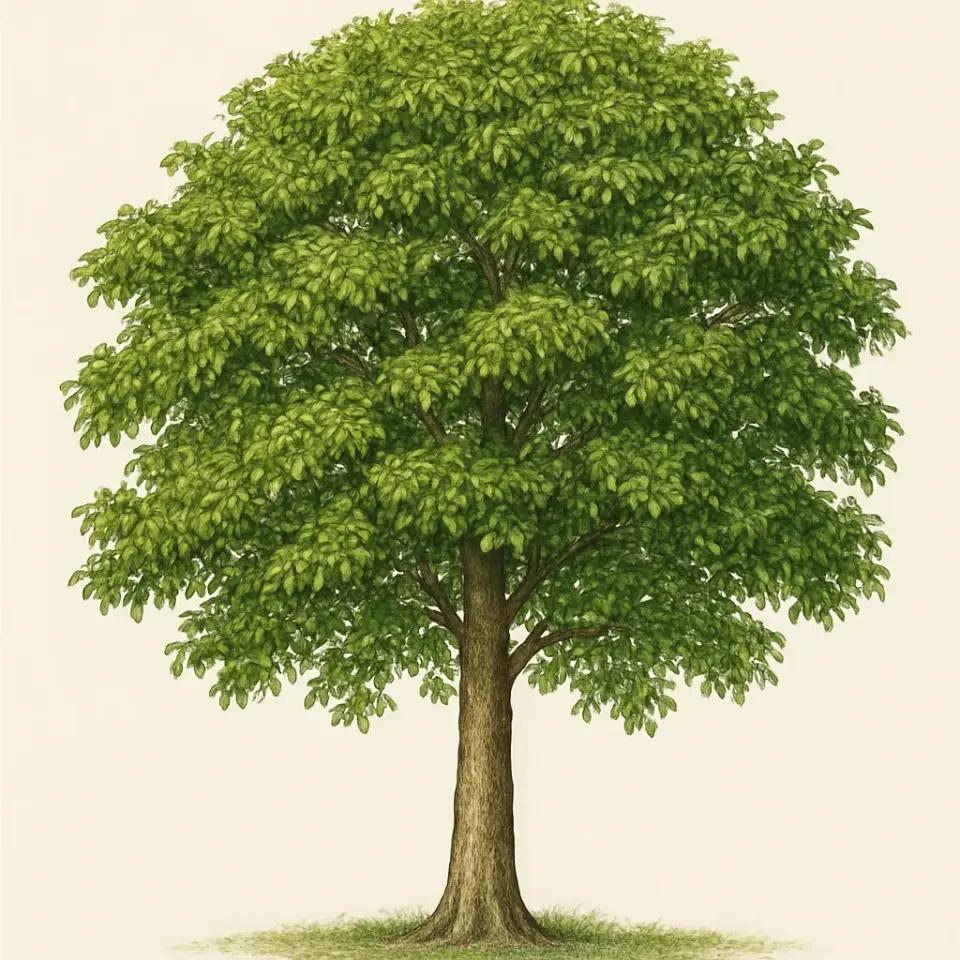
Kadamba, the tree Krishna plays his flute from
कदम्ब
The kadamba is a big, fast-growing tree with layered branches and round orange flower heads that open with the monsoon, roughly June to August. In Braj it is Krishna's tree, the one he plays the flute from in the stories, and devotees plant it around Vrindavan for that reason; in the south it is linked with Parvati and Murugan.
A big, fast-growing tree with tiers of horizontal branches and orange flower-heads the size of a golf ball, each one a tight globe of tiny scented florets. In Braj story this is the tree Krishna plays the flute from.
How to recognise it
Large paired glossy leaves, branches in clear layers, and in the rains dense orange-yellow globes hanging on short stalks; the scent carries well at dusk. The fruit is a soft fleshy ball.
Where to see it
Mayapur
The kadamba is Krishna's tree, and at a Vaishnava centre it is planted deliberately: the perfectly round orange flower heads appear with the first heavy rain.
 ISKCON Mayapur (often) · Bethuadahari Wildlife Sanctuary (in season)
Vrindavan
Devotees plant kadamba around Vrindavan precisely because of the flute story, so most of the trees you meet are planted rather than wild. The tree the older Braj landscape called kadamb was more often kaim (Mitragyna parvifolia), a dry-country relative in the same family that grows here without watering, and locally both trees carry the name.
Vrindavan Parikrama Marg (often) · Bhandirvan (Bhandir Vat) (often) · Gahvar Van
How to recognise it
A mature tree can grow very tall, up to about 45 m, with a straight trunk and broad branches that spread in clear horizontal tiers. The leaves are large, 13–32 cm long, glossy and set in pairs. Trees start flowering at four or five years old. The flower heads are dense globes about 5.5 cm across, made of many tiny scented florets, and they ripen into a soft, fleshy yellow-orange fruit ball holding thousands of seeds. The flowers are distilled into attar, the traditional Indian perfume on a sandalwood base.
The tree is native to South and Southeast Asia and is one of the most widely planted trees in the tropics, for shade along roads and villages and for light timber and paper.
Krishna's tree, and Parvati's
The kadamba is named in the Bhagavata Purana, and in north India it belongs to Krishna. In the Braj stories he plays the flute from its branches, and in one well-known episode he hides the garments of the gopis, the cowherd girls bathing in a pond near Vrindavan, in a kadamba and climbs up after them. The scene is told in songs, stories and paintings, always with the tree behind it. Kalidasa ties the flowering kadamba to the monsoon rains, and in bhakti poetry its scent stands for longing in the rainy season.
In the south the same tree is known as Parvati's tree. In Sangam-era Tamil Nadu, Murugan of Tirupparankundram near Madurai was worshipped as a spear under a kadamba, and in Madurai the kadamba is the sthala vriksha, the sacred tree of the place, at the Meenakshi Amman temple, which keeps a withered relic of an old tree. The Kadamba dynasty, which ruled from Banavasi in present-day Karnataka from 345 to 525 CE, took its name from it.
Two trees called kadam
Around Vrindavan the name kadam is carried by two trees. Most of the big glossy kadambas you meet are planted, precisely because of the flute story. The kadamb of the older, drier Braj landscape was more often kaim (Mitragyna parvifolia), a relative from the same family that grows without watering, and some believe it, not Neolamarckia, is the kadamba of the bhakti poems.
Where and when to see it
Come in the rains: the flower heads appear with the first heavy rain, and July and August are the weeks to look. In Vrindavan trees are planted along the parikrama path and in the temple gardens that open onto it, and in and around the Bhandirvan grove across the Yamuna. Gahvar Van has only a few planted trees; its old wooded slope is mostly other species. The town's other notable trees are gathered on the trees and flowers page.
In Mayapur, the Vaishnava centre in West Bengal, kadambas are planted deliberately in the ISKCON temple gardens, and the ball-shaped flowers open there with the rains too.
FAQ
When does the kadamba tree flower?
With the monsoon, roughly June to August. In Vrindavan the best weeks are July and August.
Why is the kadamba called Krishna's tree?
In the Braj stories Krishna plays his flute from a kadamba and hides the gopis' clothes in one. The tree is named in the Bhagavata Purana.
What is the kadamba called in Hindi?
Kadamb (कदम्ब); in Braj it is usually shortened to kadam.
Sources (3)
Facts checked: 8 October 2026. Prices and hours are approximate; check locally.