 India GO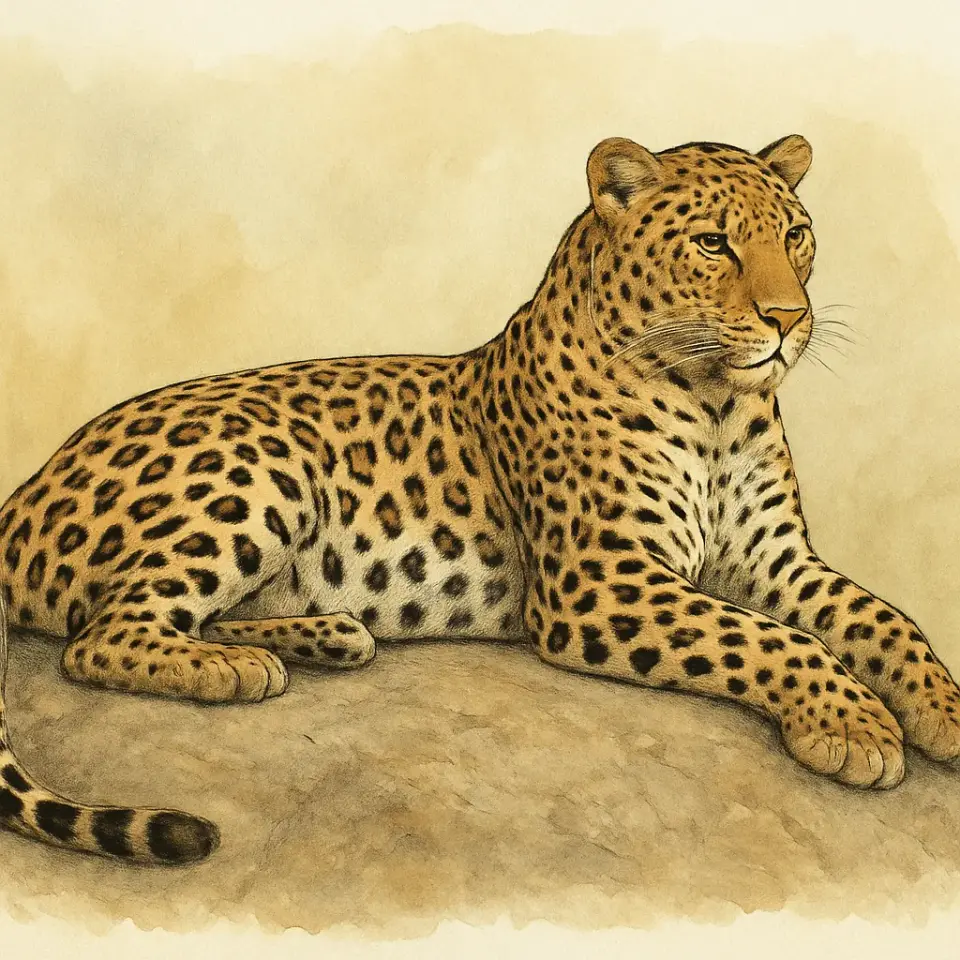
Indian leopard
तेंदुआ (tendua)
A big cat that lives on the edges of Indian cities, and in some of them within the city limits.
How to recognise it
Rosettes, a heavy tail with a white tip, and a habit of lying along a rock ledge in the last hour of light. Sightings are almost always from the safari vehicle on the forest tracks, most often at the waterholes.
Protection
Schedule I, Wildlife (Protection) Act, 1972
Where to see it
Chandigarh
In March 2020, during the lockdown, a leopard strayed into Sector 5 and was released in the Morni Hills. Camera traps set in Sukhna Wildlife Sanctuary in November 2025 identified two individual adult male leopards.
 Sukhna Wildlife Sanctuary · Morni Hills and Tikkar Taal
Dehradun
Wildlife Institute of India researchers link the growth of Rajaji's leopard population partly to the long absence of tigers, which returned to the western Motichur range only in December 2020; on one winter survey day they saw leopards 11 times.
Rajaji National Park · Maldevta
Haridwar
As tigers recovered in the Chilla range after the herders left in 2003, Wildlife Institute of India researchers recorded leopards declining there and turning more to small prey and village livestock.
Rajaji National Park, Chilla · Jhilmil Jheel Conservation Reserve
Jaipur
Jhalana was declared India's first leopard reserve by the Rajasthan Forest Department in 2017. Its leopards live largely on the edges of the city, and research on them has focused on how a big cat feeds itself on the edge of a large city. Jhalana Reserve Forest is a 29 km² island of dry forest ringed by the city, where camera trapping identified 25 individual leopards in 2017–2018.
Jhalana Leopard Reserve (often) · Nahargarh Biological Park
Mumbai
A camera-trap census run from February to June 2024 by the Wildlife Conservation Society–India with the Maharashtra Forest Department counted 54 leopards across Sanjay Gandhi National Park, Aarey and Tungareshwar, up from 35 in 2015. Almost nowhere else on earth do this many big cats live inside a city of this size.
Sanjay Gandhi National Park · Kanheri Caves
Rishikesh
The 27 km road to Neelkanth runs through the core of the Rajaji Tiger Reserve, where a 2024 study estimated about 24 leopards per 100 km², one of the highest leopard densities recorded.
Neelkanth Mahadev Temple