 India GO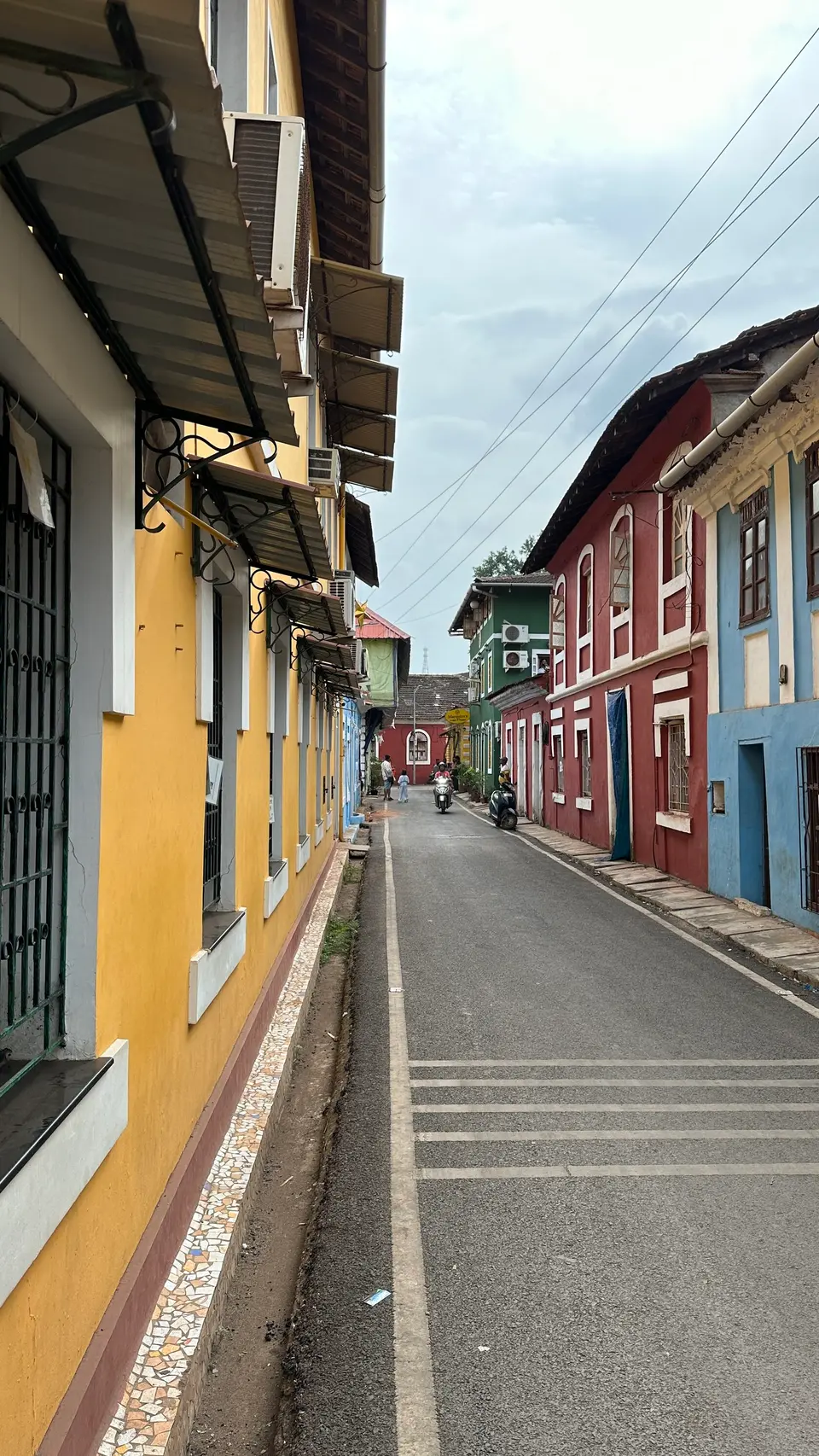
Fontainhas: the Latin Quarter of Panjim
The Latin Quarter
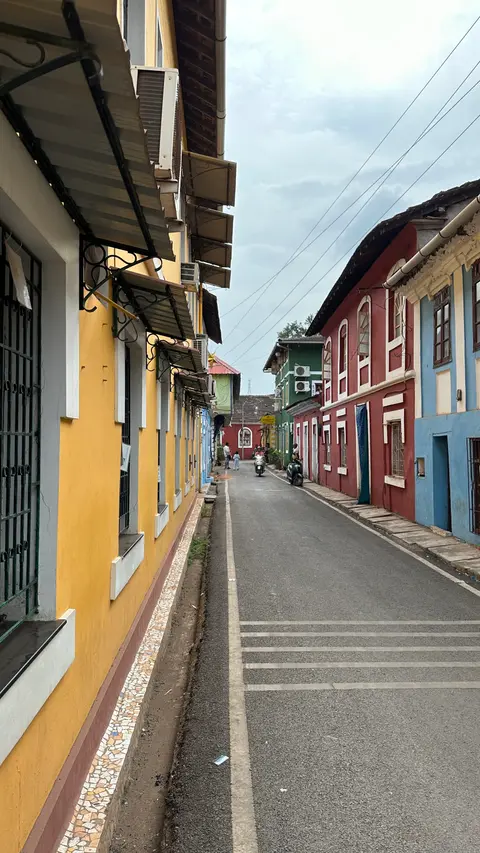
Fontainhas is Goa's prettiest quarter: a tangle of narrow lanes in Panjim lined with Portuguese-era houses in ochre, indigo, green and sky blue, wrought-iron balconies and blue azulejo plaques with the house names. It grew in the late 18th century on reclaimed land and became the city's Portuguese-speaking quarter. Come on foot; a car ruins it.
What to see
Where to eat

Shopping

A walk through the quarter
The loop of Rua 31 de Janeiro and Rua de Natal takes less than an hour and passes every postcard angle; the stops below turn it into a morning.
Start early on Rua 31 de Janeiro at Confeitaria 31 de Janeiro, a tiny bakery with a wood-fired oven since 1930: Goan sweets and Portuguese pasteis de nata with coffee. Walk the loop slowly and read the details: windows glazed with oyster shell, azulejo name plates (hand-painted Portuguese-style tiles), small chapel crosses marking the blocks. The houses are private homes, so look from the street.
On Rua de Ourém, beside the Panjim Inn, Velha Goa Galeria has sold azulejos since 1999: tiles, ceramics and made-to-order name plaques, the one souvenir that could not come from anywhere else. Climb Altinho hill to Cafe Bodega, a garden cafe in the courtyard of the Sunaparanta arts centre, for a slow coffee among the exhibitions.
For lunch, Viva Panjim is a family-run restaurant down a narrow lane, in a heritage house of vintage mirrors and painted tiles, cooking Goan home food; vegetable xacuti and sannas (steamed rice cakes) are done with the same care as the classics. In the evening the quarter has For The Record, India's first vinyl bar, with feni cocktails.
Fontainhas and the rest of Panjim
Fontainhas is the old corner of Panaji, and the two belong in one day: above the quarter rises the white zigzag staircase of Our Lady of the Immaculate Conception, and the municipal market, busiest from about 8:00 to 13:00, closes a morning walk well. Next door is the São Tomé quarter. Old Goa, the older Portuguese capital of churches rather than houses, is about 10 km upriver and makes the natural second walk. If you would rather go with a guide, walking tours in Goa covers the options: guided walks here last about two hours.
When to come
Time of day matters more than month here. Come around 8 am for soft light and quiet lanes, or towards sunset when the cafes fill; the middle of the day is the hottest. Guided walks are also best early in the morning or after 4 pm. The lanes are narrow, with slopes and steps, so wear comfortable shoes. The dry months from November to February are the most pleasant. For the way here, see getting around Goa.
❓ FAQ
Where is Fontainhas?
In Panaji (Panjim), Goa's capital, on the lanes below the Altinho slope, a few minutes' walk from the Church of Our Lady of the Immaculate Conception.
How long do I need for Fontainhas?
The loop of Rua 31 de Janeiro and Rua de Natal takes under an hour; with a bakery, the azulejo gallery and lunch, plan a morning. A guided walk takes about two hours.
Is there nightlife in Fontainhas?
Quiet bars rather than clubs: For The Record, India's first vinyl bar, serves feni cocktails in a Portuguese-era building.
Can I go inside the houses?
No, they are private homes. Look from the street, and enter only shops, cafes and galleries.
Facts checked: 12 October 2026. Prices and hours are approximate; check locally.
Other areas of Goa
In the app: the city's areas on the map, the places inside and a route.
Open in India GO