 India GO
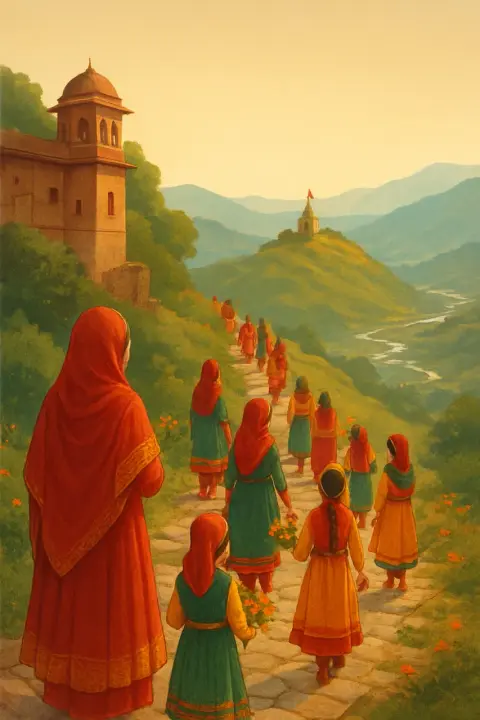
Sui Mata Mela: Chamba's fair for the queen who brought the water
Women and girls singing a lament for the queen who brought the town its water
Sui Mata Mela, also called Suhi Mela, is a three-day fair in Chamba, Himachal Pradesh, held for Queen Sunayana, remembered locally as Rani Suhi. By Chamba tradition she gave her life so that water would reach the new town. Only women and children take part in the processions, from the Pink Palace up to the Sui Mata temple above the town and on to Maluna; everyone else watches. It usually falls in the first half of April, on dates the Chamba district administration sets each year.
The Chamba district administration fixes the three days each year and announces them in early April.
The legend

Legend says that when Chamba was founded the town had no water: the channel from the Sarotha stream stayed dry however hard the workers tried.
Queen Sunayana, known as Rani Suhi, gave her life at the source so that water would reach the people. The channel still flows in Chamba today.

King Sahil Varman built her a memorial on the hill above the town, later the Suhi Mata temple. Women especially revere her stone image.
Customs
Women's procession
Only women and children take part. On day one they walk in procession from the Pink Palace to the Suhi Mata temple, on day two to Maluna.
Ghurehi dance
Gaddi women dance the ghurehi, retelling the queen's story, and residents hold community feasts.
The legend of Rani Suhi
The story is told as a local legend. When Chamba was founded, the town had no water: a kuhal, a traditional hill channel, was dug from the Sarotha stream about two miles away, but water would not flow in it. King Sahil Varman dreamt that it would flow only if the queen or one of his sons was buried alive at the source. Queen Sunayana chose to go herself, and once she was buried there the water came. The channel still supplies parts of Chamba.
The king later built her a memorial on the hill above the town, now the Sui Mata temple, where her stone image is revered, above all by women. Himachal Tourism places the story in the 10th century; some press accounts say the 6th.
How the three days run
The order below follows recent fairs as reported in the local press; the district administration publishes the programme each spring.
- Day 1: Pink Palace to the temple
Women in traditional dress walk in procession from the Pink Palace in the town up to the Sui Mata temple, singing folk songs and performing rituals. This is the main day.
- Day 2: to Maluna
The procession goes from the temple to Maluna, believed to be the queen's memorial site at the source.
- Day 3: the close
On the last day the goddess's sacred symbol is carried in a palanquin in a closing procession between the temple and the Pink Palace, and Gaddi women from Bharmour sing ghurehi (ghurei), songs that retell the queen's story.
How to watch respectfully
- Watch from the side — The processions belong to women and children; men and visitors look on from the roadside and do not join the line.
- Ask before photographing — Ask before taking close photographs of women and girls in the procession or at the temple.
- Dress modestly — The UK Foreign Office asks travellers to respect local dress codes and customs at religious sites; modest clothing suits a temple fair.
- The fair stalls — Himachal Tourism notes that stalls selling local goods do brisk trade during the fair.
Other festivals in Chamba
Chamba's larger festival is the Minjar Mela in July or August. The Manimahesh Yatra starts from Bharmour in the same district, and the hill station of Dalhousie is in the same district.
FAQ
When is Sui Mata Mela?
Usually three days in the first half of April. The Chamba district administration fixes the dates each year and announces them in early April.
Is Suhi Mela the same as Sui Mata Mela?
Yes. Suhi and Sui are two spellings of the queen's name; the Hindi name is Suhi Mela.
What is the story of Rani Sunayana?
By Chamba legend, the town's new water channel stayed dry until Queen Sunayana agreed to be buried alive at its source; then the water flowed. The fair is held in her memory.
Can men or visitors take part?
Only women and children walk in the processions. Others are welcome to watch from the side.
Where is the Sui Mata temple?
On the hill overlooking Chamba town; the first-day procession climbs to it from the Pink Palace.
Sources (4)
Facts checked: 22 October 2026. Prices and hours are approximate; check locally.