 India GO
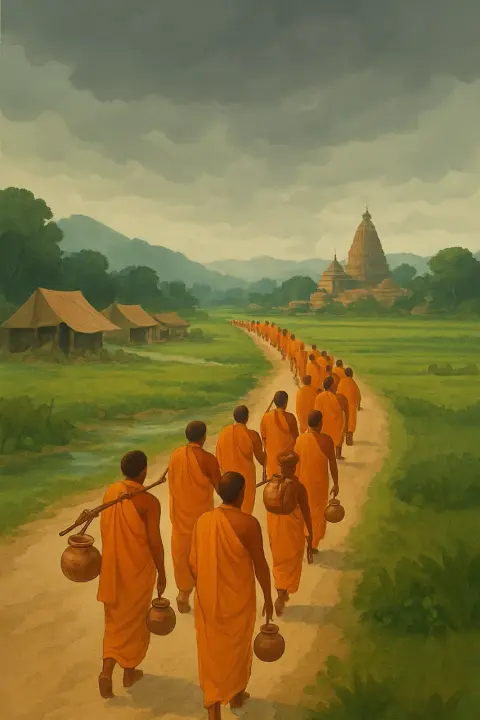
Shravani Mela: the 105 km walk from Sultanganj to Deoghar
A saffron river of walkers carrying the Ganga to Shiva on their shoulders
Shravani Mela is the month of Shravan at Deoghar in Jharkhand, when kanwariyas fill vessels with Ganga water at Sultanganj in Bihar and walk about 105 km to pour it over the jyotirlinga of Baba Baidyanath. Dates: 19 July – 17 August 2027, from the day after Guru Purnima to Raksha Bandhan. The Deoghar district estimates 50 to 55 lakh (5 to 5.5 million) pilgrims over the month, and the Mondays of Shravan are the busiest days.
The month follows the lunar calendar; the Bihar and Jharkhand governments open the mela the day before it starts, and the Deoghar district administration publishes the arrangements in June or July.
The legend
The Baba Baidyanath temple at Deoghar is one of Shiva's twelve jyotirlingas. All through the month of Shravan, Ganga water is carried to it.

The water is drawn at Sultanganj, by the Ajgaibinath temple: here the Ganga turns to flow north, which makes it especially sacred to collect.
The walk of about 105 km, the Kanwar Yatra, stands for devotion, penance and purification.
Customs
The kanwar
Pilgrims, the kanwariyas, dressed in saffron, carry the water in pots on a decorated bamboo yoke and do not set it down for the whole way.
Bol Bam
All along the road the pilgrims repeat the call "Bol Bam", and it sounds on the road day and night.
Water for the linga
At Deoghar pilgrims dip in the Shivganga tank, then pour the Ganga water over the jyotirlinga in the temple; many walk on to Basukinath.
Where to celebrate
Deoghar
For the month of Shravan a saffron column of kanwariyas walks 105 km from the Ganga at Sultanganj to pour its water over the Baidyanath lingam in Deoghar; Mondays are the peak.
The route, stage by stage
The walk is the Deoghar branch of the Kanwar Yatra: the kanwar is a decorated bamboo yoke with a water vessel at each end, carried on the shoulder and, by custom, not set down on the ground for the whole way. Walkers are dressed in saffron and call "Bol Bam" along the road day and night. Most walk the distance in stages over three to five days, sleeping at the stops.
- Sultanganj, Ajgaibinath Dham
The start. Here the Ganga turns to flow north, which makes its water especially sacred to collect. Pilgrims fill their vessels on the bank below the Ajgaibinath temple. Sultanganj station is on the Bhagalpur line.
- The kanwariya path to Dumma
About 105 km of road to the Jharkhand border at Dumma and on to Deoghar, lined for the month with rest camps, stalls and medical posts. In recent melas the Deoghar administration has set up information centres along its section, from Dumma into town.
- Shivganga, Deoghar
The tank where walkers bathe before entering the temple.
- Baba Baidyanath temple
One of Shiva's twelve jyotirlingas and the end of the walk: the jalabhishek, pouring the carried water over the lingam. Queues pass through the queue complex and barricaded lines that stretch for kilometres on Mondays. On peak days in recent years an external argha, a channel that carries the offered water to the jyotirlinga, has also been used.
- Basukinath, Dumka district
About 45 km further on. Many pilgrims complete the observance here. In recent years the Deoghar administration has run special-permit buses between Deoghar and Basukinath during the mela.
How big the crowds are
The figures come from the authorities themselves. The Deoghar district puts the month's total at 50 to 55 lakh pilgrims and calls the mela the longest religious fair in the world. For the last Monday of Shravan in a recent mela, the public broadcaster DD News reported more than three lakh (300,000) pilgrims expected at the temple in a single day, with the queue stretching more than four kilometres, and more than 55 lakh visitors already counted that month.
For a visitor this means two things. Mondays, and the Sunday nights before them, when walkers start arriving in large numbers, are when the queues are longest and the town is fullest. And the road itself, any stretch between Sultanganj and Dumma, can be watched freely without joining the temple queue at all: the column of walkers runs day and night for the whole month.
Safety and rules on the ground
The UK Foreign Office notes that stampedes have happened at large religious gatherings in India and advises particular care at them. In practice that means following the barricades and police instructions, and keeping out of the queue lines unless you are going in.
- No VIP entry — In recent years the Deoghar administration has banned VIP darshan for the mela, so everyone used the same queue. Whether the ban applies again is set by each year's order; check it when the arrangements are published.
- Traffic and parking — In recent melas private vehicles have been parked at grounds outside the town, and many roads have been made one-way or closed to heavy vehicles on Sundays and Mondays. Come in by train or plan to walk the last stretch.
- Heat and humidity — Shravan is the monsoon month, and DD News reported strong sun and humid conditions on peak days. Carry water; in recent years the administration has added drinking-water points and water sprinkling along the queues.
- Help desks — In recent years the district has run information centres across the mela area and a chatbot reached by QR code for routes, stays and lost-and-found.
Getting there and where to stay
To walk, be at Sultanganj three to five days before the Monday you want to reach Deoghar on. Trains to Sultanganj and to Jasidih Junction, the main station for Deoghar, fill up soon after the 60-day booking window opens, and in recent years Indian Railways has run mela special trains; Deoghar airport (DGH) is the other way in.
Book a room about six weeks ahead: Deoghar's hotels and dharamshalas fill for every Shravan Monday and prices stay high all month. In recent years the district administration has published a rate chart for hotels during the mela, along with fixed prices for peda (the local milk sweet) and restaurant meals, and has provided kanwariyas with free shelter, toilets and drinking water in tent cities and halls on the route and in town. Each year's arrangements are set anew.
Before and after
The mela ends on Raksha Bandhan, the full moon of Shravan. Deoghar also holds smaller fairs at Shivaratri, Basant Panchami and Bhadra Purnima, and Bengal has its own Shravani Mela at Tarakeswar in the same month.
FAQ
When is Shravani Mela?
Next: 19 July – 17 August 2027. It runs the whole month of Shravan in the north Indian lunar calendar, from the day after Guru Purnima to Raksha Bandhan, and the Mondays are the peak days.
How far is Sultanganj from Deoghar on foot?
About 105 km. The Deoghar district gives 105 km for the distance and 109 km for the walking route; most pilgrims take three to five days.
How many people attend Shravani Mela?
The Deoghar district estimates 50 to 55 lakh (5 to 5.5 million) pilgrims over the month. On the last Monday of a recent mela more than three lakh were expected at the temple in a single day.
Why is the water taken from Sultanganj?
At Sultanganj, by the Ajgaibinath temple, the Ganga turns to flow north, which makes its water especially sacred to collect for Shiva.
Which station is nearest to Deoghar?
Jasidih Junction is the main station for Deoghar; the walk itself starts from Sultanganj station on the Bhagalpur line. Deoghar also has an airport (DGH).
Sources (7)
Facts checked: 21 October 2026. Prices and hours are approximate; check locally.