 India GO
Nyokum Yullo: the Nyishi festival of land and togetherness
Hours of priestly chant around a bamboo altar
Nyokum Yullo is the main festival of the Nyishi, the most populous tribe of Arunachal Pradesh, held every year on a fixed day in late February. Next date: 26 February 2027. It is a prayer for good harvests and protection from famine and natural disaster, led by a priest at a temporary bamboo altar, followed by circle dances in traditional dress and a shared feast. Because it is celebrated in and around the state capital, Itanagar, it is the easiest of Arunachal's community festivals for a visitor to see.
The date is fixed and appears in the Arunachal Pradesh holiday list, issued in August or September of the previous year; local celebration committees announce their programmes in February.
The legend
'Nyok' means land and 'kum' means togetherness. At Nyokum the Nyishi invite all the gods of the universe, led by the goddess Nyokum, to one place at one time.
The goddess of prosperity is asked for good harvests and protection from famine, drought and flood. To the Nyishi, well-being is harmony with gods and nature.
Nyokum was first held as a community festival in Joram village in 1967. Today its main day is 26 February.
Customs
Bamboo altar
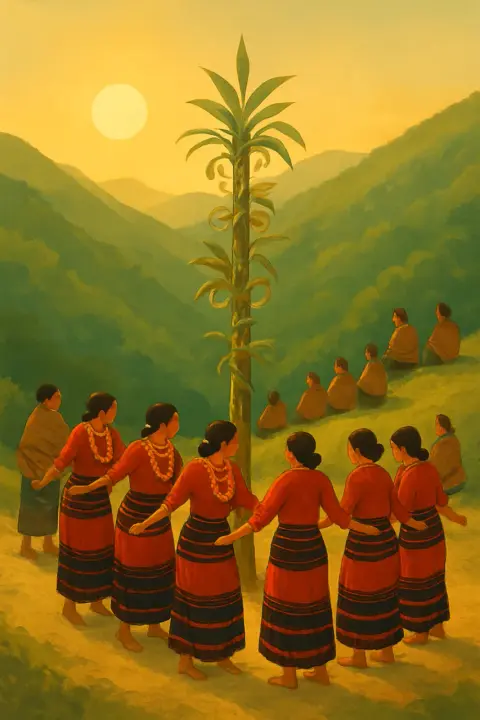
Prayers are held at the yugang, a temporary bamboo altar. There are no idols and no permanent shrine; a priest, the nyubh, leads the rite.
Circle dance
Men and women in festive dress join hands in a circle and sing 'Nyokum bo tapa debe'.
What Nyokum means
Nyok means land and kum means togetherness. At Nyokum the Nyishi invite all the gods and goddesses of the universe, led by the goddess Nyokum, to one place at one time. The festival is closely tied to cultivation: the goddess of prosperity is asked for more grain at the next harvest, and for protection from famine, drought, flood, pests and epidemic.
Behind it lies a view of the world in which well-being depends on harmony between people, gods and nature, and misfortune follows when the spirits of mountains, rivers and forests are displeased. Nyokum was first held as a community festival in Joram village in 1967, and it has had a fixed main day in late February since then. It is in the Arunachal Pradesh government's list of holidays, with a local holiday in the Itanagar Capital Complex.
What happens on the day
Celebrations are organised by local committees, each at its own ground, so the programme varies from place to place. The core is the same:
- The yugang
Prayers are held at the yugang, a temporary bamboo altar. There are no idols and no permanent shrine. The priest, the nyubh, leads the rite and decides the offerings, which traditionally include animal sacrifice and rice or millet beer.
- Chant
The rite is long: hours of priestly chant around the altar.
- Dress
People come in traditional clothes. Men wear a cotton robe draped from the shoulder, bead necklaces and a woven bamboo cap; women wear their finest dress and jewellery.
- Circle dance
Men and women join hands in a circle and sing 'Nyokum bo tapa debe'. A shared feast follows.
Permits for Arunachal Pradesh
Visitors need a permit to enter Arunachal Pradesh on top of any visa. Both permits are issued through the state government's portal, eilp.arunachal.gov.in.
- Indian nationals: eILP — The eILP is mandatory for Indian nationals. The tourist (provisional) permit is applied for online with a photo and an ID document, individually or as a group, and costs about ₹100 per person; the fee is not refunded.
- Foreign nationals and NRIs: ePAP — A Protected Area Permit is mandatory for foreign nationals and NRIs. The portal issues it to groups of two to five applicants per application, with validity of up to 30 days. Citizens of Afghanistan, China and Pakistan, and foreigners of Pakistani origin, need prior approval from the Ministry of Home Affairs.
- Apply early — The FCDO says permit rules can change at any time and advises applying three months before arrival.
Etiquette and safety
Nyokum is an act of worship that the community opens to guests.
- At the altar — Keep a respectful distance from the yugang while the nyubh is chanting and do not walk through the ritual space. Ask before photographing the priest or people in ceremonial dress.
- The dance — Join the circle only if you are invited.
- Official advice — The FCDO notes that protests and blockades are common in the north-eastern states and can disrupt the highways linking them with Assam. Follow local news; see Is India safe?.
Other festivals of Arunachal
If you are planning around festivals, the Dree Festival of the Apatani in Ziro and the Solung of the Adi are the other community festivals with pages here. Both need the same permits.
FAQ
When is Nyokum Yullo celebrated?
Every year on a fixed day in late February. Next date: 26 February 2027. Local committees announce their programmes in February.
Which tribe celebrates Nyokum?
The Nyishi, the most populous tribe of Arunachal Pradesh, about 250,000 people in the 2011 census.
What does Nyokum mean?
Nyok means land and kum means togetherness: the festival invites all the gods, led by the goddess Nyokum, to one place at one time.
Where can I see Nyokum Yullo?
In and around Itanagar, where it is a local holiday in the Capital Complex, and across Nyishi areas such as Papum Pare district.
Do I need a permit?
Yes. Indian nationals need an eILP and foreign nationals an ePAP, both from eilp.arunachal.gov.in. The ePAP is issued to groups of two or more.
When was Nyokum first celebrated?
As a community festival, in Joram village in 1967.
Sources (7)
- Government of Arunachal Pradesh: holiday notification (Nyokum Yullo, Nyishi; local holiday in the Itanagar Capital Complex)
- Nyokum
- Nyishi people
- Arunachal Pradesh eILP portal: ILP information
- Arunachal Pradesh eILP portal: ePAP information
- FCDO: India entry requirements (access permits)
- FCDO: India regional risks
Facts checked: 21 October 2026. Prices and hours are approximate; check locally.