 India GO
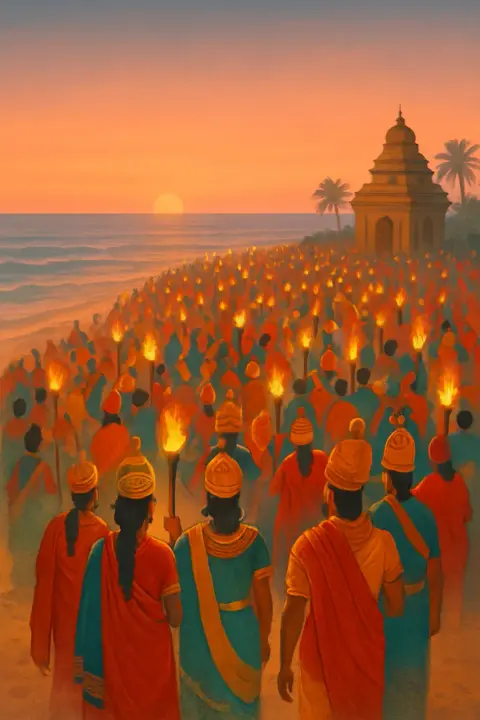
Kulasai Dasara: vow-keepers follow the goddess to the sea
Vow-keepers in greasepaint follow the goddess to the sea for a midnight battle
Kulasai Dasara is the Navratri festival of the Mutharamman temple in Kulasekarapattinam, a coastal village in Thoothukudi district, Tamil Nadu. For twelve days the goddess is taken out in procession, thousands of devotees keep vows in costume and body paint, and on Vijayadashami night she slays the demon Mahishasura on the beach at midnight. Dates: 11–22 October 2026.
The temple fixes the schedule, which reaches the press two to three weeks ahead; the Tamil Nadu holiday list, issued in December of the previous year, gives Vijayadashami.
The legend
Kulasekarapattinam is an old Pandya port on the Coromandel Coast, named after King Maravarman Kulasekara.

The Mutharamman temple here is about 300 years old, and the goddess is believed to watch over the village and keep its people from harm.
The festival ends with the goddess's victory over the demon king Mahisha, enacted on the seashore on Vijayadashami.
Customs
Guise of a vow
Under a vow people take the guise of Kali, other gods, kings or monkeys, keeping the costume and paint through the festival.
Alms for the goddess
The costumed vow-keepers go round collecting alms by old custom and give what they gather to Mutharamman.
A dip in the sea
After the goddess's midnight victory everyone wades into the sea in costume and dances to the music.
Where to celebrate
Kulasekarapattinam
Hundreds of thousands gather on Kulasekarapattinam beach on Vijayadashami night, many in vow costumes and body paint, to see the goddess slay Mahishasura at midnight.
The temple and the festival
Kulasekarapattinam is an old Pandya port on the Coromandel Coast, named after King Maravarman Kulasekara. Its Arulmigu Mutharamman temple is over 300 years old, and the goddess is believed to watch over the village and keep its people from harm. Kulasai is the short name used locally.
The festival follows the Navratri calendar that the rest of India keeps (see our Navratri and Dussehra pages): the flag goes up at the temple nine days before Vijayadashami, the goddess goes out in procession every day on one of her vahanas (carved mounts), and the festival closes two days after the main night. Tamil Nadu Tourism describes it as a celebration of the victory of good over evil, attended by lakhs of people each year.
What sets it apart is that it is carried by the people who come. There is no single stage show: the festival is thousands of individual vows walking through the village streets, and on the last night down to the sea.
Vows, costumes and alms
Devotees take a vow to the goddess and, under it, take on a disguise: Kali, other deities, kings, monkeys, bears, lions, tigers or gypsies, with bold make-up and body paint. They keep the costume through the festival and, Tamil Nadu Tourism notes, act as if possessed by the deity they portray, offering predictions to the people they meet. Historically many vows were made for a cure from smallpox; today people come with all kinds of personal, financial and emotional troubles. People of other faiths also take part.
Some keep the vow for three, five or ten years, some for life. Those who take the form of Kali undertake the strictest penance, 48 days of it: vegetarian food without onion or mustard, walking barefoot, sleeping on the floor and bathing twice a day in cold water.
From about the seventh day, troupes in costume move through the village and neighbouring villages, singing and dancing and collecting alms (yaasagam) by old custom. The alms are offered to Mutharamman, and a share goes into the temple's hundi, the offering box.
Vijayadashami night on the beach
The festival builds to one night on the shore.
- Evening: the beach fills
From the evening of Vijayadashami lakhs of people gather near the temple and on Kulasekarapattinam beach.
- Midnight: the Soorasamharam
The goddess is brought to the shore and, at midnight, slays Mahishasura, the demon king, in a re-enactment of the battle.
- Towards dawn: into the sea
After the goddess's victory the vow-keepers wade into the sea in costume, dance to the music and end their vows on the beach at dawn.
Etiquette and safety
Everything is free to watch, from the street troupes to the beach.
- The costumes are vows — They are not fancy dress. Ask before taking close portraits, and offer alms only if you wish to.
- Follow police instructions — The district police issue rules for the festival; costumed devotees have been told not to bring iron weapons, and offenders face criminal cases. On the main night vehicles are parked outside the village and the last stretch is on foot.
- Crowds — FCDO notes that stampedes have happened at large religious gatherings in India and advises following the local authorities. Agree a meeting point away from the shore; in an emergency call 112.
Getting there and where to stay
The village itself has almost no rooms, and it has one road in.
- Stay in Tiruchendur or Thoothukudi
Book a room about two months ahead: both towns fill for the last nights. Expect a slow road on the main night.
- Book transport when sales open
Take trains to Tiruchendur or flights to Thoothukudi as soon as the 60-day booking window opens: the festival falls in the October holiday travel season.
- Arrive the afternoon before
Two nights cover the eve and the main night, when the crowd disperses only towards dawn; a third night lets you see the street troupes too.
FAQ
When is Kulasai Dasara?
Next: 11–22 October 2026. The flag goes up nine days before Vijayadashami, the Soorasamharam is at midnight on Vijayadashami, and the festival closes two days later. The temple's schedule reaches the press two to three weeks ahead.
What is Kulasai Dasara festival?
The Navratri festival of the Mutharamman temple in Kulasekarapattinam, Tamil Nadu, known for devotees who keep vows in costume and body paint, and for the goddess's midnight victory over Mahishasura on the beach.
In which district is Kulasai Dasara held?
In Thoothukudi district, Tamil Nadu, in the coastal village of Kulasekarapattinam south of Tiruchendur.
What is the nearest railway station to Kulasai?
Tiruchendur is the usual railhead for the festival, and Thoothukudi has the nearest airport; both are also where most visitors stay.
Why do people wear costumes at Kulasai Dasara?
Under a vow to Mutharamman. Devotees take the form of Kali, other deities, kings or animals, collect alms in costume and offer them to the goddess.
Sources (5)
Facts checked: 21 October 2026. Prices and hours are approximate; check locally.