 India GO
Igas Bagwal: the second Diwali of the Garhwal hills
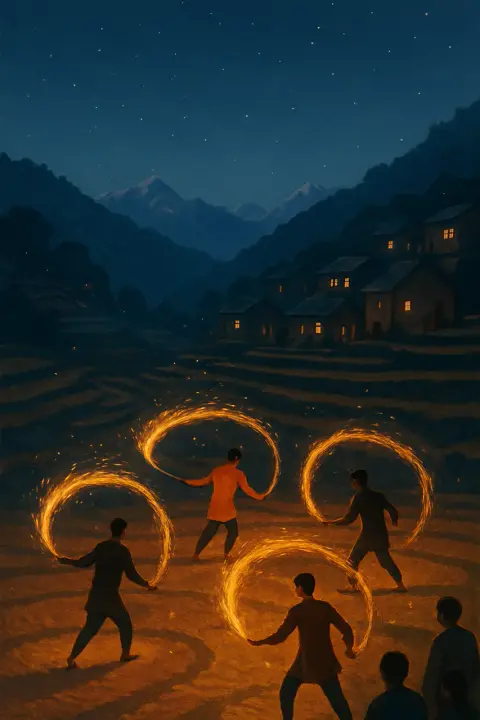
Burning bundles of pine whirled on ropes through the dark of Garhwal's courtyards
Igas Bagwal, also called Budhi Diwali, the late Diwali, is a festival of Uttarakhand kept mainly in Garhwal, eleven days after Diwali. It falls on Ekadashi, the eleventh lunar day of the bright half of Kartik, and is celebrated with oil lamps, drums and torches of pine whirled in the dark rather than with fireworks. Next: 20 November 2026 (expected).
The day follows the lunar calendar; the Uttarakhand government lists Igas as a holiday.
The legend
Tradition says news of Rama's return to Ayodhya reached the Uttarakhand hills only eleven days later, so the hills lit their own Diwali then.
Another story links it to the Garhwal commander Madho Singh Bhandari, whose victorious return from Tibet was celebrated after Diwali was over.
Igas is the eleventh lunar day and bagwal the Garhwali word for a festival of lights; hence its other name, Budhi Diwali, the late Diwali.
Customs
Bhailo
In the evening torches of dry pine and grass are lit and swung in circles in the open, to songs and dancing.
Dhol and damau
Oil lamps burn in the houses, and the village sings and dances late into the night to the Garhwali dhol and damau drums.
What Igas Bagwal is
The name explains the festival. Igas is the eleventh lunar day, Ekadashi, and bagwal is the regional word for a festival of lights; together they mean the Diwali of the eleventh day. That is why it is also known as Budhi Diwali, the old or late Diwali.
It is a one-day festival and the date follows the lunar calendar, so it moves each year, usually between late October and late November. The Uttarakhand government lists Igas as a holiday. In a greeting to the state, the Governor of Uttarakhand described Igas-Bagwal as the state's traditional folk festival, a symbol of social unity, family values and reverence for nature.
The festival is a village celebration rooted in Garhwal, but in recent years it is also kept in the towns and cities of the state, often with community events organised by cultural groups. For the Diwali itself, eleven days earlier, see the Diwali page.
Why Garhwal celebrates eleven days later
Two stories are told, and both are legends rather than recorded history.
The first follows the Diwali story itself. When Rama returned to Ayodhya after defeating Ravana, the news took eleven days to cross the mountains to the remote hill villages, so the hills lit their lamps only when it arrived. For more on the deity, see Rama.
The second is local. It links the festival to Madho Singh Bhandari, a commander of the Garhwal kingdom, whose army returned victorious from a campaign in Tibet after Diwali was already over. The villages celebrated his homecoming with a Diwali of their own, and the custom stayed.
How the night is celebrated
The peak is the evening and night of the festival itself.
- Bhailo — Torches are made from dry pine wood and grass, tied to a rope, lit and swung in circles in the open, to songs and dancing. The burning circles are the image most people know the festival by, and they stand for light winning over darkness.
- Lamps in the houses — Families light oil lamps and decorate their homes, as at Diwali.
- Dhol and damau — The village sings and dances late into the night to the Garhwali dhol and damau drums.
- Food and visits — Households cook traditional dishes and sweets, visit relatives and neighbours, and share community feasts.
If you are in Uttarakhand
Igas Bagwal is not staged for visitors. It is worth planning around only if your trip already takes you to the Garhwal hills eleven days after Diwali; then it makes a memorable night. Hill towns on the usual routes, such as Mussoorie, Rishikesh and Dehradun, are the natural bases, and the same trip can take in Diwali itself.
Bhailo means open fire swung on ropes: watch from a distance, keep children back, and follow what local people tell you. Ask before photographing people in their homes and courtyards.
FAQ
What is Igas Bagwal in Uttarakhand?
A one-day festival of lights kept mainly in Garhwal eleven days after Diwali, on the Ekadashi of the bright half of Kartik. It is also called Budhi Diwali, the late Diwali.
When is Igas Bagwal?
Next: 20 November 2026 (expected). The date follows the lunar calendar and usually falls between late October and late November.
Why is Budhi Diwali celebrated?
By one legend, news of Rama's return to Ayodhya reached the hills eleven days late. By another, Garhwal celebrated the return of the commander Madho Singh Bhandari from Tibet after Diwali had passed.
What is bhailo?
A torch of dry pine wood and grass on a rope, lit and swung in circles in the open on the festival night, to songs and dancing.
Facts checked: 21 October 2026. Prices and hours are approximate; check locally.