 India GO
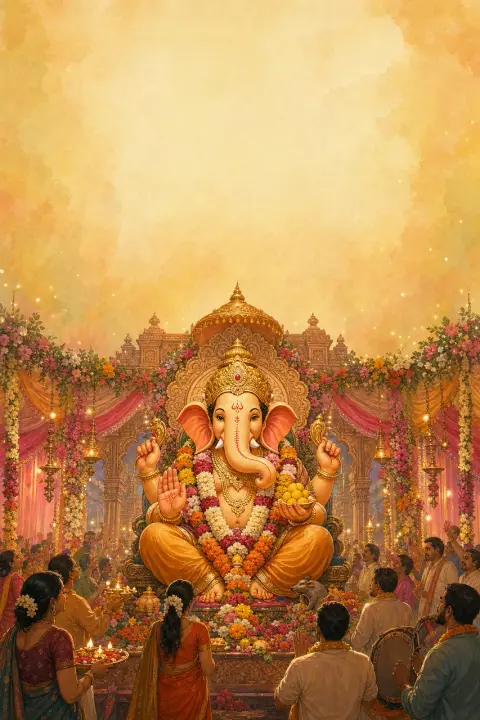
Ganesh Chaturthi in Mumbai: the pandals, the queues and the visarjan
Ten days when Mumbai belongs to Ganesha
In Mumbai Ganesh Chaturthi is ten days in which whole neighbourhoods build a pandal round an idol, and an eleventh on which the city walks its idols into the sea. Chaturthi is 4 September 2027, and the festival runs 4–14 September 2027, ending on Anant Chaturdashi with the largest idols immersed at Girgaum Chowpatty.
Ten days in which whole neighbourhoods build a pandal round an idol, and an eleventh on which the city walks its idols into the sea.
Where to watch
Lalbaugcha Raja, Lalbaug: the most visited mandal in the city, with two separate free queues: Mukh Darshan, a view of the idol from the aisle, and the far longer Charan Sparsh (Navsachi) line to the idol's feet. Chinchpokli and Currey Road stations are a short walk.
Ganesh Galli (Mumbaicha Raja), Lalbaug: the set-piece themed pandal, a short walk from Lalbaugcha Raja. Free.
GSB Seva Mandal, King's Circle, Matunga: the gold-ornamented idol, known for an orderly queue. Free.
Girgaum Chowpatty: the shore where the largest idols go into the sea on Anant Chaturdashi; Juhu, Dadar and Versova beaches are immersion points too.
Free viewing
- The whole visarjan route is free. Marine Drive's seawall gives the long view of the Girgaum immersions without joining the beach crowd.
- Smaller lane pandals a few streets back from the famous ones are free of queues entirely.
Programme
Ganesh Chaturthi
Two separate queues form at Lalbaugcha Raja and they are not interchangeable. Mukh Darshan views the idol from the aisle. Charan Sparsh, the Navsachi line, reaches the idol's feet.
 Lalbaugcha Raja pandal, Lalbaug, Parel
Anant Chaturdashi: visarjan
Processions converge on the shore; the largest idols are taken into the water at Girgaum Chowpatty, with immersions continuing past midnight.
Girgaum Chowpatty, Marine Drive; also Juhu, Dadar and Versova beaches
How Mumbai’s public festival began
Ganesh Chaturthi was long a household festival. In 1893 Bal Gangadhar Tilak championed the sarvajanik, or public, Ganesh festival in his newspaper Kesari, and public celebrations took hold in Pune and in Girgaon in Mumbai, partly as a way round British limits on public assembly. The Government of Maharashtra has since declared it an official state festival.
The city’s most visited mandal (festival committee) has its own origin story. In 1934 Koli fishermen and vendors at Lalbaug, who had lost their market in 1932, vowed to Ganesha that they would win a permanent site, and founded the mandal now known as Lalbaugcha Raja. The Kambli family has sculpted its idol for more than eight decades. About the god: Ganesha.
The eleven days in Mumbai
The festival runs 4–14 September 2027. The queues at the big mandals lengthen every day, so come early in the ten days if darshan is the goal, and stay to the end if the visarjan is.
- The day before Chaturthi
The best day to arrive. Idols are carried to homes and pandals through the streets.
- Chaturthi, 4 September 2027
The installation morning and the first evening aartis are the least crowded good days at the famous mandals.
- After 1½, 3, 5 or 7 days
Some families say goodbye early, so smaller immersion processions to the sea and to the city’s other immersion points run through the week.
- Anant Chaturdashi: the visarjan
From morning the big idols leave their pandals with drums and the chant “Ganpati Bappa Morya”, and the processions move towards the shore through the night. The largest are immersed at Girgaum Chowpatty; Juhu, Dadar and Versova beaches are immersion points too.
Lalbaugcha Raja: which queue to join
Lalbaugcha Raja is the most visited mandal in Mumbai, and both of its queues are free. The Mukh Darshan line gives a view of the idol from the aisle without going on stage; it can take three to four hours or more, especially at weekends. The Charan Sparsh line, also called the Navsachi line, is for devotees who want to touch the idol’s feet, and it can run past 20 hours. If you only want to see the idol, the Mukh Darshan line is the one.
Chinchpokli and Currey Road stations on the Central line are a short walk from Lalbaug. Ganesh Galli (Mumbaicha Raja), the set-piece themed pandal, is a short walk from Lalbaugcha Raja, and the GSB Seva Mandal at King’s Circle in Matunga is known for its gold-ornamented idol and an orderly queue. Smaller lane pandals a few streets back from the famous ones have no queue at all.
Visarjan day and the crowds
The UK Foreign Office (FCDO) advises avoiding large gatherings, including at religious sites, and notes that stampedes have occurred at events with large crowds, including religious gatherings. On visarjan day the roads to the shore close; see getting around Mumbai.
- The long view — Marine Drive’s seawall gives a view of the Girgaum immersions without joining the beach crowd.
- Stay within walking distance — For the visarjan, a room around Girgaum, Marine Drive or Churchgate puts the shore on foot; Churchgate and Charni Road are the nearest stations.
- Valuables — Keep valuables in front pockets. The FCDO warns of pickpockets in busy tourist areas, and the queues and processions are dense for hours.
- At the water — Keep away from the water’s edge as the large idols go in, and ask before photographing families during the farewell.
- Trains out of Mumbai — Much of the city goes home to the Konkan coast for Ganpati, and trains in that direction sell out within minutes of opening, 60 days ahead.
FAQ
Which place is famous for Ganesh Chaturthi in Mumbai?
Lalbaug, for Lalbaugcha Raja, the most visited mandal in the city, and Girgaum Chowpatty, where the largest idols are immersed on Anant Chaturdashi.
How many days is Ganesh Chaturthi in Mumbai?
Ten days of pandals from Chaturthi, with the final immersion on the eleventh day, Anant Chaturdashi. Some families immerse their Ganesh earlier, after one and a half, three, five or seven days.
What is the date of Ganesh Chaturthi in Maharashtra?
Chaturthi is 4 September 2027, and the festival runs 4–14 September 2027. The Maharashtra holiday list and the central government’s restricted list confirm the day.
How long is the queue at Lalbaugcha Raja?
The Mukh Darshan line, a view from the aisle, can take three to four hours or more; the Charan Sparsh line to the idol’s feet can run past 20 hours. Both are free.
Are the pandals free?
Yes, public pandals are free to enter, including the queues at Lalbaugcha Raja and the GSB Seva Mandal. The whole visarjan route is free to watch too.
Sources (4)
Facts checked: 21 October 2026. Prices and hours are approximate; check locally.