 India GO
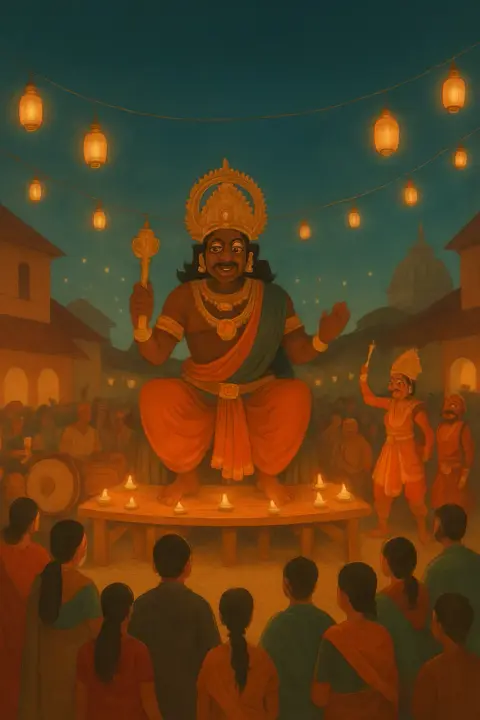
Dhanu Jatra in Bargarh: a town that becomes Mathura
The whole town becomes Mathura, and its tyrant king holds court in the street
Dhanu Jatra is an eleven-day play about Krishna and his tyrant uncle Kansa, staged across the town of Bargarh in western Odisha and the villages around it. It is called the world's largest open-air theatre and has had National Festival status from the central government since 2014. The next edition runs 12–22 January 2027, ending on Pausha Purnima, the full moon of Pausha, with Kansa's death.
The Dhanu Yatra committee and the Bargarh collector announce each edition two to three months ahead.
The legend
The play is the story of Krishna and his tyrant uncle Kansa, who invites Krishna and Balarama to Mathura for the Dhanu, the festival of the bow.
Old residents say Bargarh's workers began the play in 1947 to celebrate India's freedom: Kansa's death stood for the end of colonial rule.

For these days the town becomes Mathura, the village of Ambapali becomes Gopapura and the Jira river becomes the Yamuna.
Customs
Kansa's court
Every evening "King" Kansa holds court on a big stage in the centre of Bargarh, before guests and an audience of all ages.
Painted Gopapura
In Ambapali houses are painted with scenes from Krishna's life, and verses are written on the walls.
Scenes on the river
On the Jira are played Krishna's birth and Vasudeva's crossing, the Raas Leela with the gopis and Akrura coming for the brothers.
Where to celebrate
Bargarh
For eleven days Bargarh plays Mathura and the village of Ambapali across the Jira river plays Gopapura, as the Krishna story runs through the streets to Kansa's death at Pausha Purnima.
How the play works
For the eleven days the whole of Bargarh becomes Mathura, Kansa's capital. The village of Ambapali across the Jira river becomes Gopapura, where Krishna grows up, a mango orchard stands in for Brindavan, and the Jira itself plays the Yamuna. The action is spread over an area given as about an 8 km radius, and there is no written script.
Most scenes are played in the streets, in the villages and on the riverbank, with no seats and no line between actors and audience: the play simply happens around passers-by. The exception is Kansa's court, held every evening on a giant stage in the centre of the town. The man playing Kansa "rules" Bargarh for the duration. He summons people to his court and fines them for faults, officials included, and the encyclopedia record even has a former Chief Minister of Odisha, Biju Patnaik, fined along with his ministers. It is all part of the play.
The story runs in order. It opens with Kansa taking the throne from his father Ugrasena, and goes on through Krishna's birth and Vasudeva carrying the infant across the river, his childhood in Gopapura and the Raas Leela with the gopis on the riverbank. Akrura then comes to take Krishna and Balarama to Mathura for the Dhanu, the festival of the bow that gives the jatra its name. On the last day, the full moon, Krishna kills Kansa and Ugrasena is restored.
How it began
The jatra has been held in Bargarh since 1947. Older residents say the town's working people started it to celebrate India's independence: Kansa's death stood for the end of colonial rule. Since 2005 the Nishamani school ground has served as the Rangamahal, Kansa's cultural stage, with shows late into the night. Other towns and villages of western Odisha stage Dhanu Jatras of their own; Bargarh's is the best known.
Where to watch
Everything listed here is free to watch.
Kansa's Durbar, Hatapada
The king's court on the big stage in the centre of Bargarh, in session every evening of the run. Watch from the crowd in front of the stage.
Rangamahal, Nishamani school ground
Kansa's cultural stage, with music and dance programmes running late into the night.
Ambapali (Gopapura)
The village across the Jira where Krishna's childhood is played out. Houses are painted with scenes from his life and verses are written on the walls.
The Jira riverbank
Krishna's birth and the crossing, the Raas Leela and Akrura's arrival for the brothers are played here.
The streets of Bargarh
Processions and scenes spill out among shoppers and passers-by through the day.
When to come and where to stay
The dates follow the lunar calendar and fall between late December and late January; the Dhanu Yatra committee and the Bargarh collector announce each edition two to three months ahead.
- Pick your days
Day 1 for the coronation of Kansa, the last day for his death; any evening in between gives you the court and the street scenes. One or two nights are enough for a visit.
- Book about six weeks ahead
Bargarh has few hotels and they fill for the whole run, which also falls in the New Year travel peak. Book trains with the same lead.
- Base yourself in Sambalpur if needed
Sambalpur, about 50 km away, has more rooms and is the usual base.
- Arriving by train
Bargarh Road station is on the line from Jharsuguda to Titlagarh, about 4 km from the main town.
- In the crowd
Evenings at Kansa's court draw large crowds. The UK Foreign Office advises following local authorities' advice at big gatherings; the emergency number is 112.
FAQ
In which state is Dhanu Jatra celebrated?
In Odisha. The best-known Dhanu Jatra is in Bargarh, in the west of the state; smaller ones are held in other towns and villages of western Odisha.
What is the world's largest open-air theatre?
Bargarh's Dhanu Jatra is described as the world's largest open-air theatre: for eleven days a whole town and the villages around it become the stage of one Krishna play.
When is Dhanu Jatra?
Next: 12–22 January 2027. It lasts eleven days and ends on Pausha Purnima, the full moon of Pausha.
Do you need tickets for Dhanu Jatra?
No. Kansa's court, the street scenes and the scenes in Ambapali and on the riverbank are all free to watch.
Where to stay for Dhanu Jatra?
In Bargarh if you find a room, but it has few hotels; Sambalpur, about 50 km away, is the usual base.
Sources (4)
Facts checked: 21 October 2026. Prices and hours are approximate; check locally.