 India GO
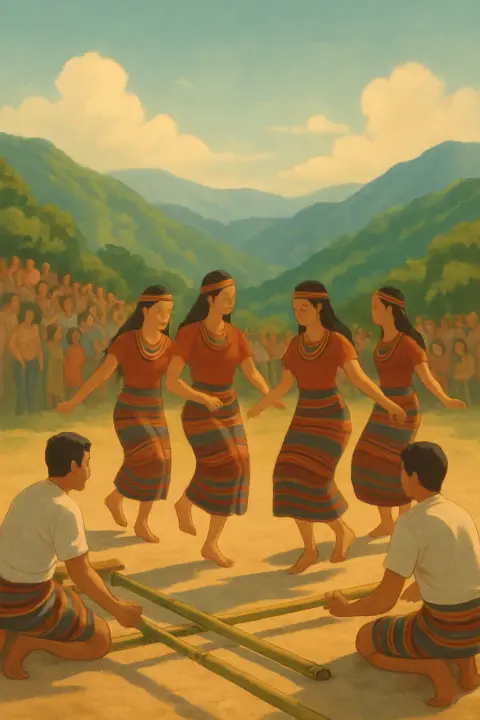
Chapchar Kut: the bamboo dance festival of Mizoram
Bamboo poles clap in rhythm and dancers step through the gaps before they close
Chapchar Kut is the spring festival of the Mizo people of Mizoram, held after the year’s hardest jhum work, the clearing of hill slopes for shifting cultivation, is done. A week of stalls and exhibitions in Aizawl builds to one state-level day at the Lammual ground, usually in the first half of March, when troupes from across the state dance the Cheraw bamboo dance. The Mizoram government fixes the day each year in its holiday list, issued between late September and November.
Mizoram's General Administration Department puts the day in its holiday list for the next year, issued between late September and November, and confirms it about two weeks ahead.
The legend

Chapchar Kut was first a thanksgiving to the gods for keeping people safe while they cleared the hill slopes for jhum fields at the start of the year.

Oral tradition says it was first held in the village of Seipui, sometime around 1450–1700, and spread from there to other villages.
In 1973 it was revived in Aizawl as a shared festival of culture. It falls at winter's end, while the felled bamboo dries and farmers can rest.
Customs
Cheraw
Men tap and clap long bamboo poles in rhythm while women step in and out between them, the beat growing ever faster.
Mizo dress
Dancers wear the puanchei and the feathered bamboo headdress vakiria; in festival week people even wear traditional dress to work.
The Lammual day
On the main day troupes from across the state dance Cheraw, Khuallam, Chheihlam and Sarlamkai on Aizawl's Lammual ground.
Where to celebrate
Aizawl
A week of stalls and exhibitions in Aizawl builds to one state-level day at Lammual, when community troupes from across Mizoram fill the ground with Cheraw, the bamboo dance.
Where the festival comes from
Chapchar Kut began as a thanksgiving to the gods for keeping people safe while they cut the forest for their jhum fields at the start of the year. It falls at winter’s end, when the felled trees and bamboo are left to dry in the sun before burning, and the villages have their one real respite of the farming year.
Mizo oral tradition places its first celebration in a large village called Suaipui (also written Seipui), in what is now Myanmar, sometime between about 1450 and 1700. The story, as the Mizoram government tells it, is of a hunt that failed: the chief’s men came home empty-handed to a village waiting for meat and rice beer. To cover the disappointment the young chief offered his own pig, each hunter brought a fowl, and the feast turned into a night of singing and circle dancing. The village repeated it every year, other villages followed, and the Chai dance is said to have been born with it.
The festival was revived in Aizawl in 1962 but was then discouraged, because rice beer and pre-Christian rites seemed to clash with Christian values. It returned on a mass scale in 1973 as a festival of shared culture, without the animist rites, and the church later stopped objecting.
What you see in Aizawl
The main day is at Lammual, Aizawl’s central ground, from the morning into the afternoon. Community troupes from across the state dance in mass formations: Cheraw, where men clap long bamboo poles together on the ground in a quickening rhythm and women step in and out between them before they close, as well as Khuallam, Chheihlam and Sarlamkai. The Chief Minister presides as Kut Pa, the father of the festival. Entry to the ground is free.
Dancers wear the puanchei and the feathered bamboo headdress vakiria, and in festival week many people wear traditional dress to work. Through the week, Lammual Tlang and Vanapa Hall hold handloom, craft and food stalls (over a hundred of them), art and photo exhibitions and performances. Part of the fun is chhawnghnawh, when people playfully push boiled eggs into each other’s mouths. District towns such as Lunglei, Champhai and Serchhip hold their own celebrations on nearby days.
Permits and getting to Aizawl
Visitors from outside Mizoram need a permit to enter the state, and it is the first thing to arrange.
- Indian nationals: Inner Line Permit — Apply online at ilp.mizoram.gov.in, at a Mizoram liaison office (Kolkata, Silchar, Shillong, Guwahati, New Delhi) or on arrival at Lengpui airport.
- Foreign nationals: Protected Area Permit — Required for all foreign visitors. Apply online through the e-FRRO portal before coming to Mizoram (the state tourism site adds that you can apply only once you are in India), then register online within 24 hours of arrival. Your hotel or host must enter your details on the Form C portal within 24 hours.
- By air or rail — Lengpui airport is about 32 km from Aizawl. Trains also run to Sairang station outside the city, with through services from Guwahati, Kolkata and Delhi. Book travel together with your room: Aizawl fills in festival week.
Local rules worth knowing
Mizoram has a few rules that catch visitors out.
- Sunday is kept strictly — Sunday is widely kept as a day of rest in Mizoram, and many shops and services close. The state day has fallen on a Friday in recent years, so plan onward travel for Saturday or Monday.
- A dry state — The consumption, production and transport of alcohol are illegal in Mizoram, and the UK government warns that drinking or possessing alcohol there can lead to arrest and detention without bail.
- Road travel in the north-east — The UK government notes that protests and blockades are common in the north-eastern states and can disrupt the highways between them, and it advises against all but essential travel to neighbouring Manipur.
FAQ
When is Chapchar Kut?
Usually in the first half of March. The Mizoram government sets the state-level day each year in its holiday list, issued between late September and November, and confirms it about two weeks ahead; in recent years it has fallen on a Friday.
What is the meaning of Chapchar Kut?
It is the Mizo spring festival that marks the end of jungle-clearing for jhum (shifting) cultivation. It began as a thanksgiving for safety during that work and is now a celebration of Mizo culture.
Which tribe celebrates Chapchar Kut?
The Mizo people of Mizoram, and Mizo communities elsewhere. Oral tradition traces it to the village of Suaipui, in present-day Myanmar.
What is the main festival of Mizoram?
Chapchar Kut is Mizoram’s main spring festival, which the state tourism department calls one of the most important. The same department calls Pawl Kut, the harvest festival of December or January, the greatest of all.
Do foreigners need a permit for Chapchar Kut?
Yes. Foreign nationals need a Protected Area Permit, applied for online through e-FRRO before entering Mizoram, and must register online within 24 hours of arrival.
Sources (12)
- Fairs and festivals, Mizoram Tourism
- The origin of Chapchar Kut, Government of Mizoram
- Chapchar Kut, Aizawl district administration
- Chapchar Kut
- Entry formalities, Mizoram Tourism
- India travel advice: safety and security, FCDO
- Chapchar Kut programme, Department of Art and Culture, Mizoram
- Inner Line Permit, Government of Mizoram
- Bairabi–Sairang line
- Sairang railway station
- India travel advice: entry requirements, FCDO
- India travel advice: regional risks, FCDO
Facts checked: 21 October 2026. Prices and hours are approximate; check locally.