 India GO
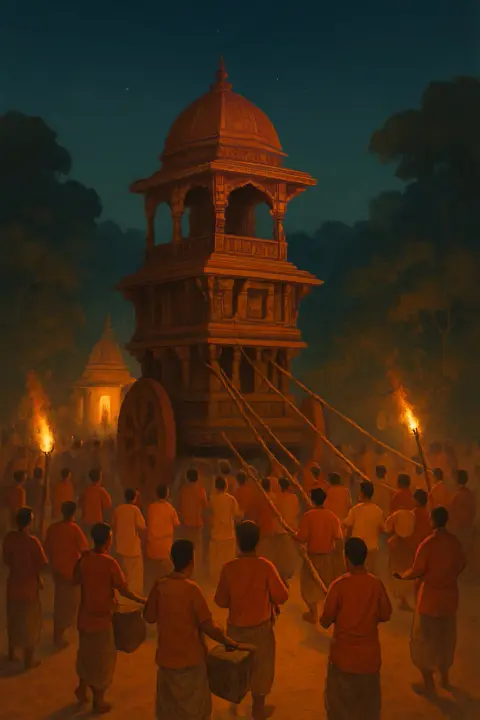
Bastar Dussehra: 75 days for the goddess Danteshwari
A goddess's wooden chariot, hauled through the town by hand and stolen by night
Bastar Dussehra is the festival of the Bastar region of Chhattisgarh, held in Jagdalpur over about 75 days. It has nothing to do with Rama and Ravana, and no effigy is burned: it honours the goddess Danteshwari and the village deities of Bastar, with a wooden chariot hauled by hand, its ceremonial theft at night and an assembly of village headmen. Dates: 12 August – 27 October 2026 (expected); the main chariot nights fall around 21 October 2026 (expected).
The dates follow the lunar calendar; the Bastar Dussehra Samiti and the Bastar district administration in Jagdalpur issue the schedule of rites around July.
The legend
Tradition says that around 1408 King Purushottam Dev of Bastar goes on pilgrimage to Puri and offers Jagannath gold and jewels.
For his devotion he is given the title Rathpati, "lord of the chariot", and back home he brings chariots to Bastar too.

Ever since, the festival opens at the new moon of Shravan, when a sal log for the new chariot is brought from the forest and worshipped.
Meaning
Muria Darbar
At the festival's close the village heads, manjhis and mukhiyas, lay their concerns before the ruler, and today before the administration too.
Dantewada
The goddess is welcomed from Dantewada, home of the Danteshwari temple, one of the 52 Shakti Peethas and family goddess of Bastar's kings.
Customs
Jogi Bithai
At the start of Navratri, at Sirasar Bhawan, a man stays seated in a yogic posture for nine days.
Village gods
Palanquins, parasols and emblems of local gods arrive from Bastar's villages: the festival belongs to the whole region.
The chariot theft
The goddess's wooden chariot is hauled through town by hand, then stolen by villagers at night and ceremonially recovered.
Words of the festival
manjhi
a village headman in Bastar, who speaks for his village at the Muria Darbar
साल
sal
a tree of India's forests whose timber builds the goddess's chariot
Danteshwari
Bastar's goddess; legend says Sati's tooth, the dant, fell at Dantewada
True or myth
❌ Myth. The festival has nothing to do with the Ramayana: for about 75 days it honours the goddess Danteshwari and local deities.
✅ True. A girl from the Mirgan community embodies the goddess Kachhin and, holding a wooden sword, grants leave for the festival and the chariot.
Where to celebrate
Jagdalpur
Worth the trip
Seventy-five days of rites for the goddess Danteshwari peak in Jagdalpur's Dussehra week: a wooden chariot pulled by hand, its theft by villagers at night and the Muria Darbar of headmen.
The rites, in order
The 75 days are not evenly filled: most of them have nothing public to see. These are the stages named by India's tourism ministry portal and the Bastar district administration.
- Pat Jatra
On Hareli (Hariyali) Amavasya, the new moon of Shravan in July or August, a log of sal wood is brought from the forest and worshipped. It opens the festival and will become part of the new chariot.
- Deri Gadai and the chariot
With the Deri Gadai rite at Sirasar Bhawan, local craftsmen begin building the wooden chariot by traditional methods.
- Kachhin Gadi
On the new moon before Navratri, a young girl of the Mirgan community, embodying the goddess Kachhin Devi, is seated on a swing of thorns and, holding a wooden sword, grants permission for the festival and for the chariot to move.
- Jogi Bithai
At the start of Navratri, in Sirasar Bhawan, a man sits in a yogic posture in a pit for nine days.
- Chariot circuits
From the second to the seventh day of Navratri, the four-wheeled flower chariot circles the old town each evening and halts at the gate of the palace (Rajmahal).
- Mavli Parghav and Nisha Jatra
The goddess Mavli, a form of Danteshwari, arrives in a palanquin from Dantewada and is welcomed in Jagdalpur. Nisha Jatra is a midnight rite with offerings, attended by priests and the former royal family.
- Bhitar Raini and Bahar Raini
The peak. On Bhitar Raini night the eight-wheeled chariot is hauled through town and then taken away by Adivasi villagers to Kumhdakot, a forest on the edge of town. On Bahar Raini, after the former ruler comes to them, it is ceremonially brought back to the palace gate.
- Muria Darbar and farewell
At Sirasar Bhawan the manjhis and mukhiyas, village headmen, lay their concerns before the former ruler and, today, the state administration. The visiting deities are then given a ceremonial farewell.
Why Bastar's Dussehra is different
Elsewhere in India Dussehra marks Rama's victory over Ravana. Bastar links its festival instead to the goddess Durga as slayer of the buffalo demon Mahishasura and, above all, to Danteshwari, the family goddess of Bastar's kings. Her temple at Dantewada is counted among the Shakti Peethas, the shrines where, in legend, parts of the body of the goddess Sati fell; here it was her tooth, the dant.
Tradition traces the festival to King Purushottam Dev, who around 1408 went on pilgrimage to Puri and offered gold and jewels to Jagannath. The priests gave him the title Rathpati, lord of the chariot, and he brought the chariot tradition home to Bastar. According to the district administration, the custom of asking Kachhin Devi's blessing dates from the 18th century, when King Dalpat Dev moved his capital.
Where to watch in Jagdalpur
Everything public is free, and the venues in the town centre are a short walk apart.
Danteshwari temple and the palace
The heart of the festival. The chariot halts at the palace gate on its evening circuits.
Sirasar chowk to Golbazar
The streets between Sirasar chowk, Golbazar and the temple are the best places to watch the chariot circuits.
The road from Kumhdakot
Where to see the chariot brought back into town on Bahar Raini.
Planning the trip
The Navratri-to-Dashami week is the one worth choosing dates for. The Bastar Dussehra Samiti and the district administration issue the schedule of rites around July.
- Arrive three days early
Be in Jagdalpur three days before the rite you have come for, and confirm its day with the district administration. Bhitar Raini and Bahar Raini sometimes fall a day after the national Dussehra.
- Book a room about six weeks ahead
Jagdalpur has few hotels, and the Dussehra week fills them. Chhattisgarh Tourism runs properties in Jagdalpur and at Chitrakote Falls.
- Buy tickets as soon as sales open
Jagdalpur's Maa Danteswari Airport has few flights, and trains run into the national Dussehra rush, so buy when sales open; Indian Railways opens bookings 60 days ahead. By road, Raipur is about 300 km away.
- Add a day around Bastar
Chitrakote Falls on the Indravati is about 40 km from Jagdalpur, and the Danteshwari temple at Dantewada is the goddess's home shrine. Bastar's village fairs, the madai, begin in December.
Etiquette and safety
Bastar Dussehra is a living religious festival of the region's communities, not a show staged for visitors.
- Night rites are not public — The night rites in the temples are not open to the public. Ask before photographing the goddess's palanquin.
- Keep clear of the chariot — The chariot is heavy and pulled by hand by large groups. Watch from the side of the street, not in its path.
- Check the region — FCDO lists Chhattisgarh among the states with Naxalite (Maoist, Left Wing Extremism) activity and advises seeking advice from your travel provider and the local authorities on affected areas before travelling. See also Is India safe?
FAQ
When is Bastar Dussehra?
This cycle: 12 August – 27 October 2026 (expected). It begins on Hareli Amavasya in July or August, and the main chariot nights, Bhitar Raini and Bahar Raini, fall around 21 October 2026 (expected), usually in late September or October.
Where is Bastar Dussehra celebrated?
In Jagdalpur, the headquarters of Bastar district in southern Chhattisgarh, around the Danteshwari temple, the palace and Sirasar Bhawan, with deities brought from villages across the region.
Is Ravana's effigy burned at Bastar Dussehra?
No. The festival is not about the Ramayana; it honours the goddess Danteshwari and the local deities of Bastar.
Why does Bastar Dussehra last 75 days?
The cycle starts with the sal log of Pat Jatra in Shravan and ends after the Ashwin full moon with the farewell of the goddess; in between come the chariot building and the Navratri rites. In a year with an extra lunar month it runs longer.
How do I reach Jagdalpur for Bastar Dussehra?
Jagdalpur has a small airport, Maa Danteswari Airport, with few flights, and a railway station; by road Raipur is about 300 km away.
Sources (5)
Facts checked: 21 October 2026. Prices and hours are approximate; check locally.