 India GO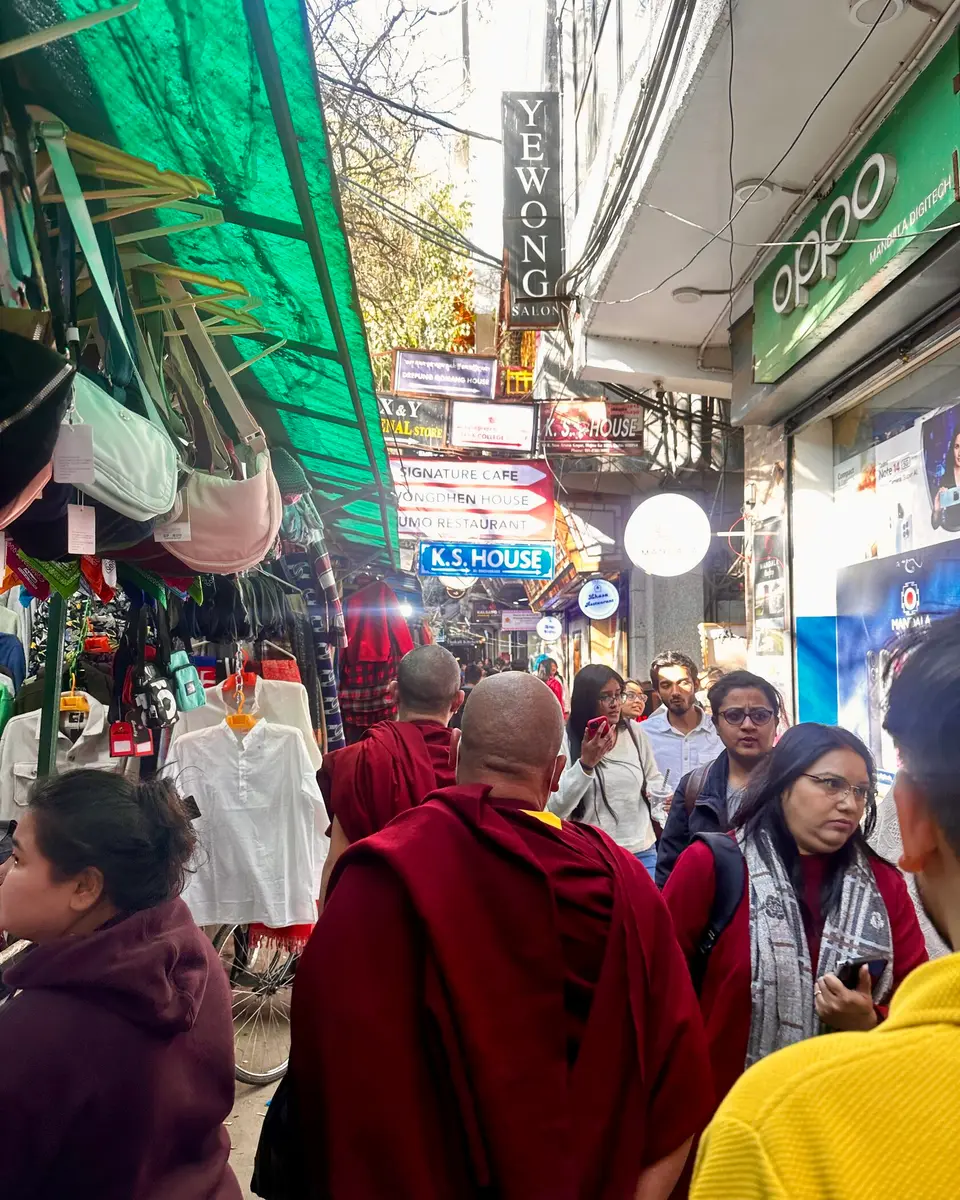
Majnu-ka-Tilla: Delhi's Tibetan quarter
Tibetan Quarter
Majnu-ka-Tilla is the Tibetan refugee colony on the bank of the Yamuna in North Delhi. Come in the afternoon for momos and thukpa, stay until the temple is lit at dusk, and leave by nine, when the lanes go to sleep.
👥 Who it suits
momos and thukpa Tibetan vibe budget long stays
 Staying here
Cheap and homely, a favourite of students and long-stayers.
🌙 In the evening
The temple glows in the evening, but the quarter goes quiet by 9 pm.
 Getting there
Ⓜ Vidhan Sabha, then a rickshaw
What to see
A walk through the colony
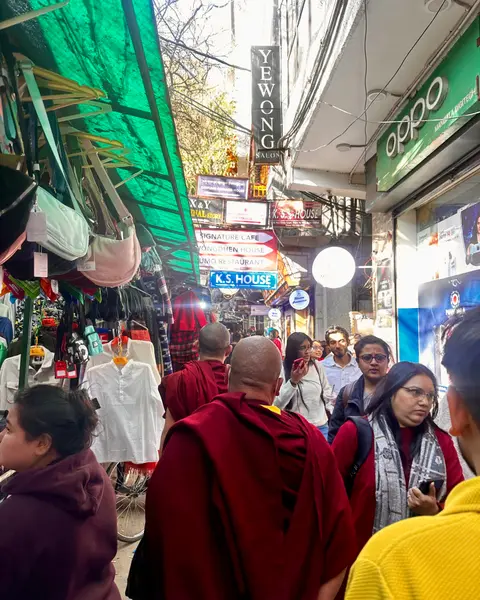
The colony is a tight knot of lanes between the main road and the river, small enough that there is no wrong way in. Shops sell incense, singing bowls and wool, and the lanes keep folding back towards the courtyard with the Buddhist temple, where monks in maroon robes cross between the shops, sometimes with a cup of bubble tea in hand.
Eat in one of the family-run kitchens: momos (steamed dumplings), thukpa (noodle soup) and shapale (fried stuffed bread). Kunga Cafe is the address the guide's momo page starts with. Newer arrivals, Korean cafes and cosmetics, draw young Delhi here too.
Finish at the temple courtyard as the lights come on.
Why it is called Majnu-ka-Tilla
The name means "Majnu's hillock". By Sikh tradition, a Sufi mystic called Abdulla, nicknamed Majnu ("lost in love"), ferried people across the Yamuna here for free, and met Guru Nanak here in 1505. In 1783 the Sikh general Baghel Singh raised the Majnu ka Tilla Gurudwara, across the main road, to mark the Guru's stay.
The Tibetan chapter began after the uprising of 1959. In 1960 the Government of India allotted land on the riverbank to the refugees, and more families arrived after 1962. Officially it is New Aruna Nagar, also known as Samyeling or Little Tibet.
When to come
Afternoon into early evening is the rhythm of the place: the kitchens are busy, the lanes are lit at dusk, and after 9 pm the colony is already asleep.
The comfortable months are October and February to March; in May and June come late in the day, and from November to January check the smog first. The colony sits on the Yamuna floodplain and has been flooded in heavy monsoons (2010 and 2013), so after days of hard rain check the news first.
On Buddha Purnima (20 May 2027) the monastery here keeps the day among prayer wheels and incense; the Buddha Jayanti page pairs it with the Bodhi tree on the Ridge.
How it differs from other areas
Majnu-ka-Tilla is far from everything else on the city's map. The closest of the other areas is the Old City: from Vidhan Sabha, the station about 1.5 km away, the Yellow Line runs south to Chandni Chowk. The two pair well for the contrast.
If momos are the point and the north is too far, the state food stalls at Dilli Haat serve Sikkimese momos in South Delhi. For Tibetan curios in the centre, the Tibetan row on Janpath is a walk from Connaught Place.
As a base the colony suits students and budget long stays, but it is far from the central sights. For a first visit Connaught Place or Paharganj are more practical; the trade-offs are on where to stay in Delhi.
❓ FAQ
Why is it called Majnu ka Tilla?
It means "Majnu's hillock". Sikh tradition names a Sufi mystic nicknamed Majnu who ferried people across the Yamuna here and met Guru Nanak in 1505; a gurudwara of 1783 marks the spot.
What is Majnu ka Tilla famous for?
Tibetan food (momos, thukpa, shapale) in family cafes, a Buddhist temple, and shops of incense, singing bowls and wool. Korean cafes and bubble tea have joined in recent years.
How do I get to Majnu ka Tilla?
Take the Yellow Line to Vidhan Sabha, about 1.5 km away, then a rickshaw. An app cab is the simpler choice late in the day.
Is Majnu ka Tilla open today? What are the timings?
It is a residential colony, not a site with a gate, so there are no official timings; each cafe and shop keeps its own hours. The lanes are liveliest from afternoon and quiet after 9 pm.
Facts checked: 8 October 2026. Prices and hours are approximate; check locally.
Other areas of Delhi
In the app: the city's areas on the map, the places inside and a route.
Open in India GO