 India GO
Street food in Delhi
The best street food in Delhi is still cooked in Old Delhi, in lanes where several snack and sweet shops are still run by the same families generations later. Timing matters: breakfast trades work in the morning and some close when the batch runs out, kebabs belong to the evening, and one dessert exists only on winter mornings. The list below names the stalls; here is how to build a day around them.
Where Delhi eats on the street
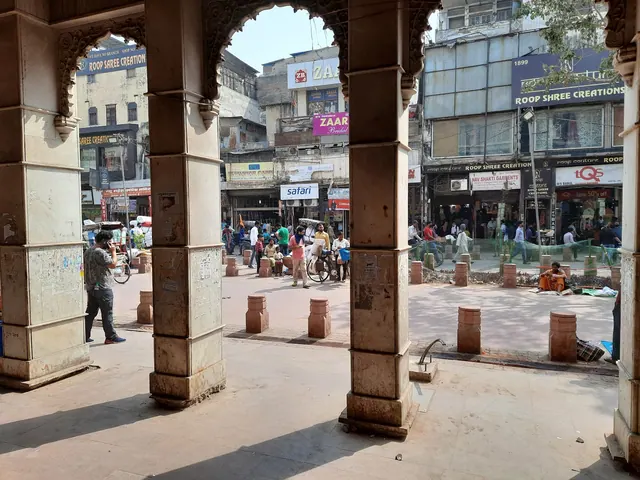
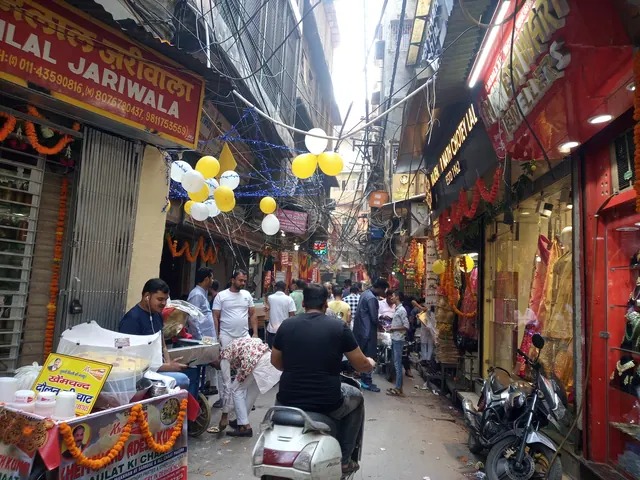
Most of the famous names sit inside Shahjahanabad, the walled city Shah Jahan founded in 1648, where each trade kept its own lane. Chandni Chowk and the lanes off it (Paranthe Wali Gali, Kinari Bazaar, Chawri Bazar, Fatehpuri) hold the paratha fryers, chaat corners and sweet shops; the streets opposite Gate No. 1 of Jama Masjid are the meat quarter. Take the metro to Chandni Chowk or Chawri Bazar (Yellow Line) or Jama Masjid (Violet Line), then walk or take an e-rickshaw, the transport that fits the lanes.
Outside the old city: Prabhu Chaat Bhandar near India Gate, Sita Ram Diwan Chand in Paharganj, Ghalib Kebab Corner in Nizamuddin Basti, and the Tibetan colony of Majnu-ka-Tilla for momos (steamed dumplings).
What to eat, hour by hour
Old Delhi street food runs on a clock.
Morning: the breakfast trades
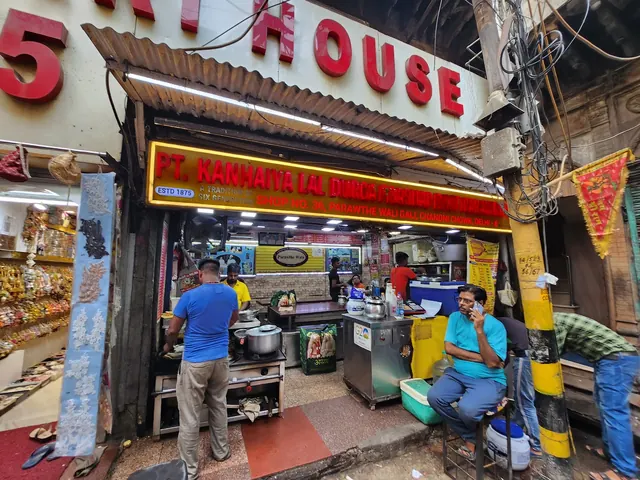
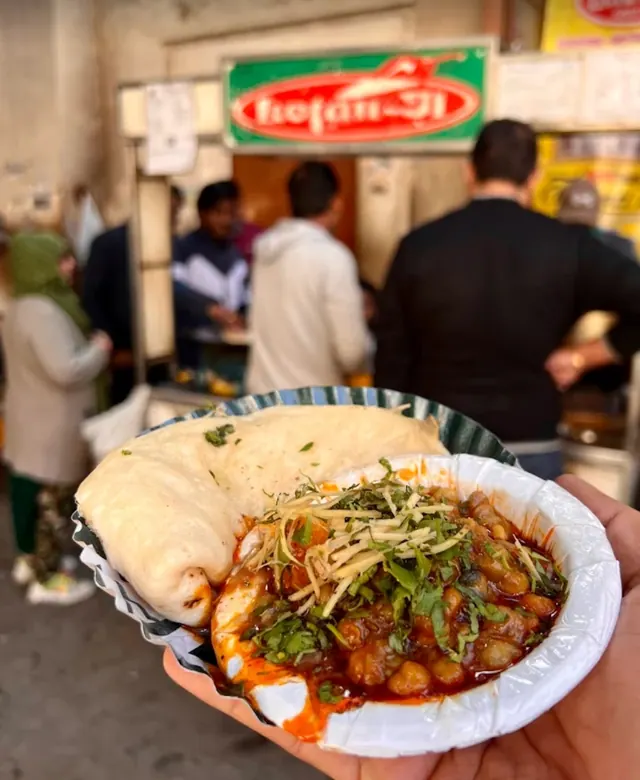
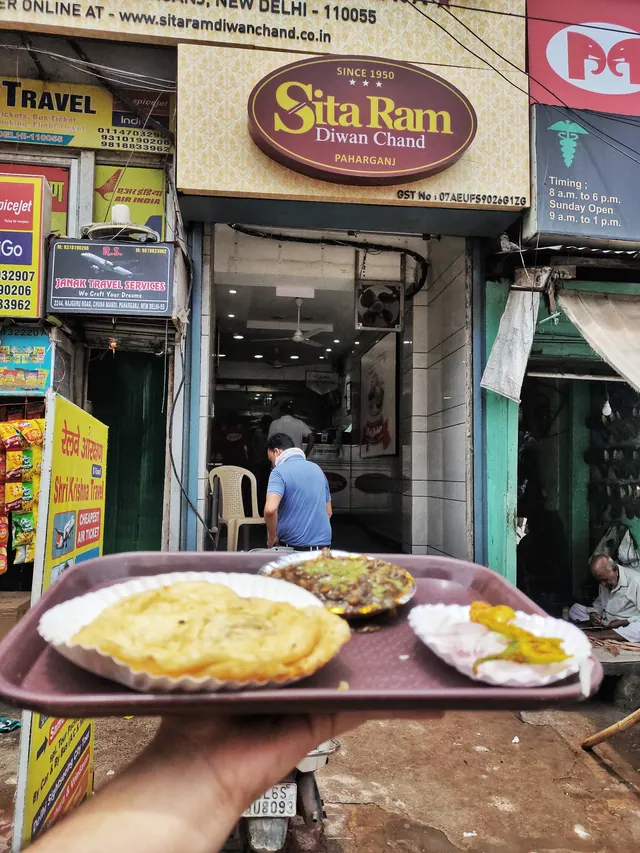
Lotan Chole Kulche at Chawri Bazar has made one dish since 1920 (spiced chickpeas with soft baked kulche) and closes when the batch runs out. Jung Bahadur Kachori Wala has fried khasta kachori, flaky pastries in spicy potato gravy, since 1971. In Paranthe Wali Gali families have fried stuffed parathas in cast-iron kadhais (deep woks) since the 1870s. Sita Ram Diwan Chand in Paharganj has served chole bhature, puffed fried bread with chickpeas, since 1950.
Chaat
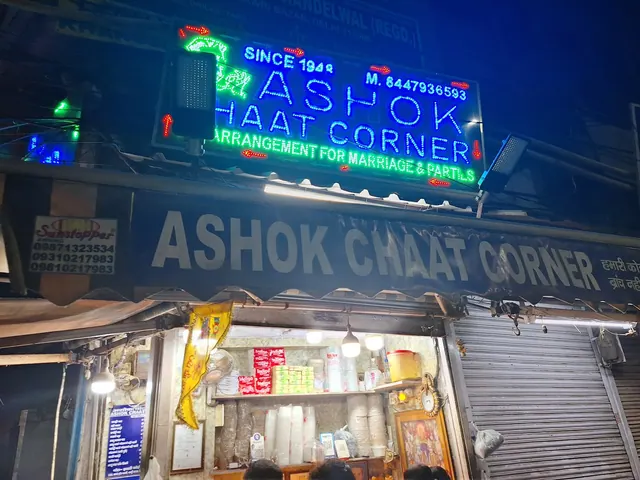
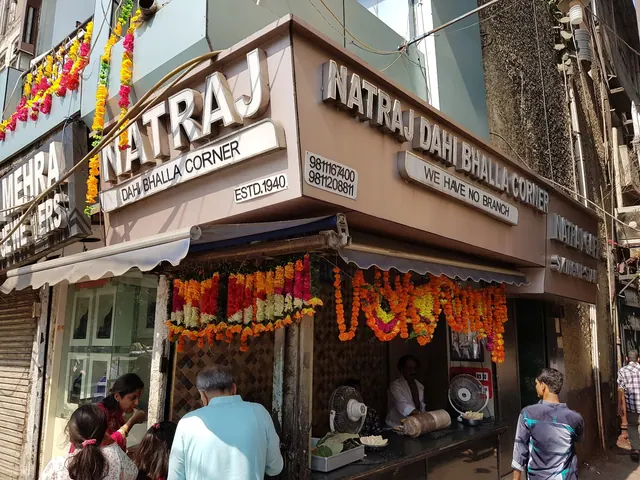
Chaat is the family of tangy snacks built from potato, crisp wafers, yoghurt and chutneys. Bishan Swaroop (since 1923) is known for aloo kachalu; Ashok Chaat Corner by Chawri Bazar metro for aloo tikki and papdi chaat; Natraj, at the mouth of Paranthe Wali Gali, for dahi bhalla, lentil dumplings in chilled yoghurt. Prabhu Chaat Bhandar near India Gate is the central option.
Something sweet
Kuremal Mohan Lal Kulfi Wale in Kucha Pati Ram freezes kulfi (dense Indian ice cream) inside whole fruit, most famously a hollowed mango. Giani's Di Hatti at Fatehpuri has poured rabri-faluda, thickened milk over crushed ice and vermicelli, since 1956. More on the sweets of Delhi.
Winter mornings only: daulat ki chaat
Milk whisked overnight into a saffron-dusted froth that dissolves on the tongue, sold from carts around Kinari Bazaar roughly from November to February, often gone by mid-morning.
Evening: kebabs
Ghalib Kebab Corner in Nizamuddin Basti grills seekh and shami kebabs to order over hot coals and often sells out early; everything on the grill is meat. The lanes to the dargah are hung with rose garlands and thick with incense.
Ramadan: the night food streets
Every night of Ramadan, Matia Mahal Road, straight out from Jama Masjid's Gate No. 1, and Bazar Chitli Qabar, the lane opposite, become a night food street from the breaking of the fast at sunset until roughly three or four in the morning. The Nizamuddin dargah serves an iftar langar (a free communal meal), and Zakir Nagar near Jamia Millia Islamia has a neighbourhood version. The metro stops around 23:30, so the trip back is by auto-rickshaw or taxi.
How to eat it well
Street food in Delhi looks chaotic; the habits that keep it pleasant are simple.
- Follow the queue — Go at peak hours, when turnover is fastest, and choose food cooked to order over high heat.
- Raw chutneys and cut fruit are optional — If your stomach is new to India, skip them for the first days; on a guided walk, say so up front.
- Carry cash — Most of the old stalls do not take cards. Sita Ram Diwan Chand and Giani's Di Hatti are exceptions.
- Avoid Sundays — Many Old Delhi shops close on Sunday, and some close through the day during Ramadan.
- Vegetarian is the default — The sweet, chaat and paratha trades are entirely vegetarian; meat is concentrated around Jama Masjid and Nizamuddin. See vegetarian Delhi.
With a guide
A guided food walk runs from Paranthe Wali Gali to Jama Masjid, eating at stalls and sweet shops rather than sitting down: several kilometres on foot through dense crowds. Delhi Heritage Walks charges approximately ₹1,000 per person with food included; private operators charge more. Book one to three days ahead. More on food tours in Delhi.
FAQ
What street food is Delhi famous for?
Chaat (papdi chaat, aloo tikki, dahi bhalla), chole kulche and chole bhature, khasta kachori, stuffed parathas, momos, kebabs, kulfi and, in winter, daulat ki chaat.
Where is the best street food in Delhi?
In Old Delhi: Chandni Chowk, Paranthe Wali Gali, Chawri Bazar and the lanes by Jama Masjid. Beyond it, Prabhu Chaat Bhandar near India Gate and Majnu-ka-Tilla for momos.
Is Delhi street food safe to eat?
Busy stalls cooking to order over high heat are the safer bet. If you are new to India, skip raw chutneys and cut fruit for the first days.
When is the best time to eat street food in Old Delhi?
Morning for kachori, chole kulche and parathas, evening for kebabs; chaat counters work through the day. Avoid Sundays, when many shops close.
Sources (3)
Facts checked: 8 October 2026. Prices and hours are approximate; check locally.
The full catalogue, hidden spots and districts on the map, plus “nearby” mode.
Open in India GO